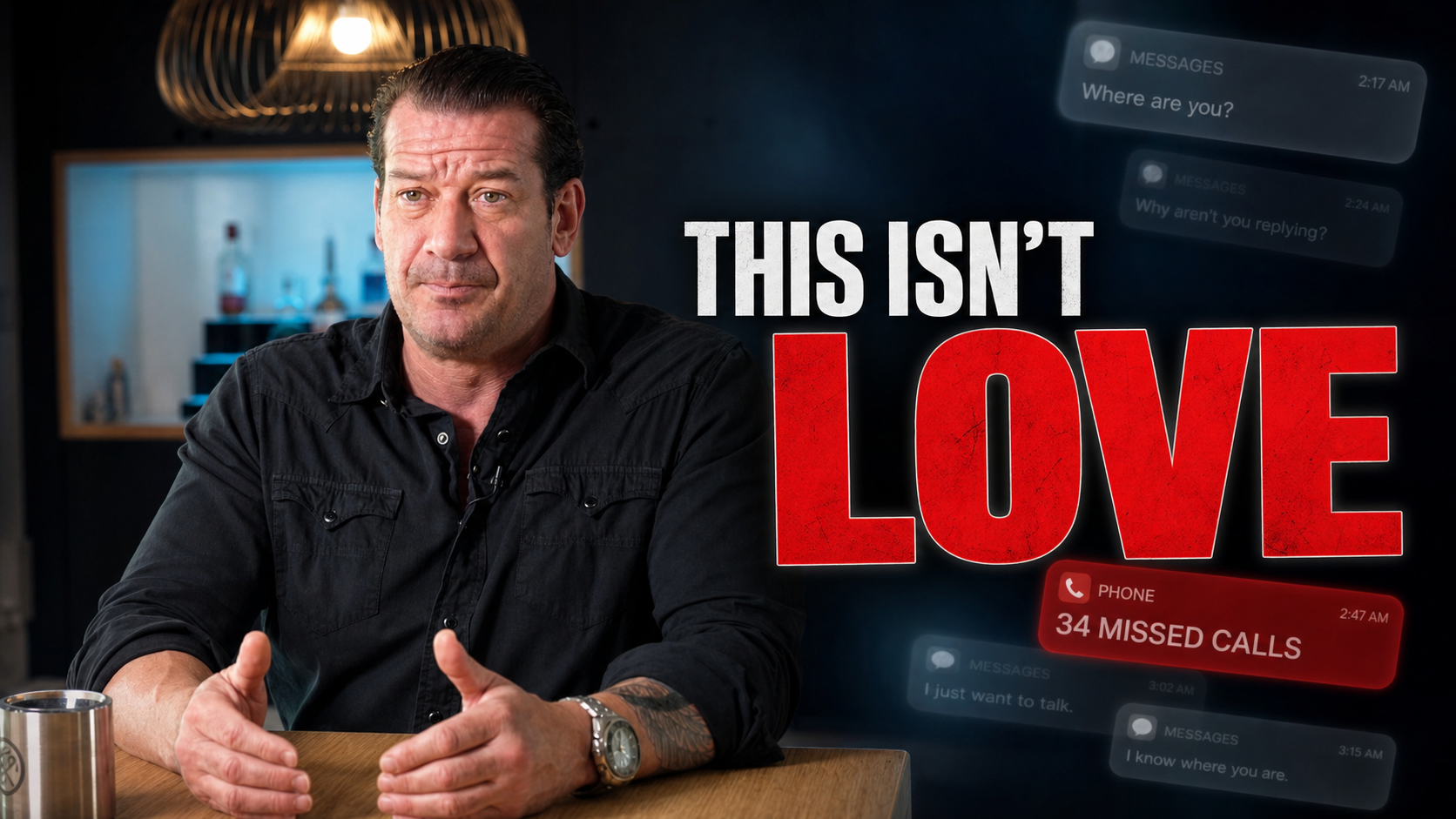
This Isn’t Love: The Psychology of Fixation, Limerence, and Stalking
Most stalkers don’t start as monsters. They start as people who can’t let go. This piece breaks down how fixation, limerence, and entitlement quietly evolve into stalking, and why understanding that progression is critical for protecting your boundaries and your safety.
Most stalkers don’t start as monsters. They start as people who can’t let go.
An unanswered text.
A relationship that ended.
A connection that never really existed outside of one person’s mind.
Somewhere along the way, attachment becomes fixation, fixation becomes pursuit, and pursuit can become stalking. One of the most dangerous misconceptions about stalking is that it’s about love. It’s not. More often than not, it’s about control, rejection, identity, humiliation, emotional dependency, and unresolved psychological wounds projected onto another person.
This article breaks down what fixation actually is, how it escalates, why limerence is not the same as obsession, and the warning signs you cannot afford to ignore.
What Fixation Really Is (And Why It Shrinks Your World)
In behavioral threat assessment, fixation is an unhealthy and increasingly rigid preoccupation with a person, cause, or idea.
The key word is rigid.
Healthy attention expands your life. It adds connection, curiosity, and growth. Fixation shrinks your world down until one individual becomes everything. Thoughts become repetitive. Emotions become dependent. Daily life starts to orbit around access, acknowledgment, or proximity to that target.
One of the most important patterns we see in casework: fixation often intensifies after rejection. Not necessarily because the relationship was meaningful, but because rejection threatens identity. The person doesn’t just feel “dumped.” They feel dismantled.
So they don’t grieve the loss. They try to restore the fantasy.
Why Some People Become Fixated
There isn’t a single path into fixation, but there are common ingredients:
Loneliness and isolation
Unresolved trauma or attachment wounds
Depression and low self‑worth
Narcissistic injury or humiliation
Fantasy as a coping mechanism
For some individuals, fantasy feels safer than reality. Reality is unpredictable and uncontrollable. Fantasy can be edited, re‑written, and replayed on demand.
Modern technology has supercharged this dynamic. Today, someone can build a one‑sided relationship indefinitely: watching stories, tracking routines, studying posts, and interpreting every caption as a private message “meant” for them. This is where parasocial attachment comes in—a one‑sided emotional bond where connection feels real even when it isn’t.
Combine loneliness, access, and imagination, and fixation can accelerate quickly.
Limerence: When Infatuation Acts Like Addiction
Not all intense attachment is dangerous. There is a psychological state called limerence that, on the surface, can look a lot like love:
It feels intense
It’s all‑consuming
It’s emotionally powerful
But it’s not love. It’s closer to addiction.
Limerence is driven more by fantasy than reality. It’s an obsessive emotional dependence on a specific person (the “limerent object”), and everything starts to revolve around them.
Cognitive Signs
Intrusive thoughts you can’t shut off
Constant mental replay of interactions
Reading meaning into every word, pause, or emoji
Interpreting neutral behavior as coded signals
The person doesn’t just think about someone—they orbit them.
Emotional Signs
Extreme highs from small crumbs of attention
Crushing lows from silence, distance, or delayed replies
Mood becomes dependent on access to that person
They’re no longer regulating internally. They’re regulating through their target.
Behavioral Signs
Repeated, escalating contact attempts
“Accidental” encounters or drive‑bys
Rereading old messages and replaying conversations
Monitoring social media, tracking patterns, staying “close” without context
In more escalated cases, these behaviors can cross into stalking. At that point, the goal is no longer connection. It’s access.
When Limerence Turns Into Obsession
What makes limerence dangerous is distortion.
Neutral behavior gets misread as interest.
Silence gets reframed as “they’re thinking about me.”
Clear rejection gets minimized, denied, or completely ignored.
The limerent person builds a future in their head that does not exist in real life. Even when boundaries are clearly set, they continue to hold onto hope—because the attachment isn’t grounded in who the other person actually is, but in what that person represents: validation, excitement, relief, escape, emotional regulation.
This is the tipping point into obsession.
Limerence can exist without violating boundaries. Obsession cannot.
The moment entitlement shows up—
“I need access.”
“They owe me a response.”
“I deserve their attention.”—
the risk escalates. The person is no longer respecting autonomy. They’re trying to override it.
Boundary Violations, Manipulation, and Hoovering
As entitlement grows, you may see:
Emotional, digital, or physical boundary violations
Agitation and anger when access is restricted
Guilt trips and emotional pressure
Threats of self‑harm to force engagement
If that fails, some individuals pivot into hoovering—sudden affection, urgency, or crisis meant to vacuum you back into contact. It’s not about genuine change. It’s about re‑establishing access.
Here’s the part most people miss: limerence is not about the person. It’s about the feeling that person provides. Just like a slot machine, it thrives on intermittent reinforcement—unpredictable hits of attention that keep the cycle alive.
You are not only dealing with emotion. You are dealing with compulsion.
Why Clear, Consistent Boundaries Matter
Compulsion does not respond to logic. It responds to access.
This is why clear and consistent boundaries are critical. Inconsistency doesn’t calm limerence; it feeds it.
Answering “just this one time”
Sending a “kind closure” message after no contact
Responding to guilt or self‑harm threats under pressure
All of these can unintentionally reinforce obsessive patterns.
Consistency is not cruelty. It is protection—for you and, ironically, for the other person’s chance at reality.
Stalking: When Persistence Becomes Escalation
Stalking rarely starts with explicit threats. It starts with persistence:
Repeated calls and texts
Showing up “by coincidence”
Unwanted appearances at work, gym, or home
One of the most dangerous mistakes people make is confusing persistence with passion.
“It’s romantic.”
“They’re just really into me.”
“They won’t give up.”
Sometimes, what looks like devotion is actually boundary violation in disguise.
What makes stalking dangerous isn’t just frequency. It’s escalation.
Emotional separation collapses
Mood depends entirely on access and response
Identity fuses with pursuit
Rejection doesn’t create closure—it creates activation
Stalking often intensifies after breakups, humiliation, or perceived abandonment because the individual isn’t just losing a relationship. They feel like they’re losing the version of themselves that existed inside that relationship.
This is where grievance forms.
Fixation + Grievance: The High‑Risk Combination
In threat assessment, one combination stands out:
Fixation + Grievance
Fixation creates focus.
Grievance creates justification.
The person begins to see themselves as the victim of betrayal, injustice, or destiny denied. Their internal narrative may start to leak out in:
Concerning statements and veiled threats
Cryptic or emotional social media posts
Dramatic language about fate, destiny, or payback
Rationalizing revenge as “fair” or “necessary”
You may also see pathway behaviors:
Monitoring routines
Testing boundaries
Approaching locations
Using third parties to make contact
These are not random. They are indicators. Dangerous behavior rarely appears out of nowhere. It develops.
Why Some People Move On While Others Spiral
Two people can experience the same breakup and respond in completely different ways. The difference often comes down to identity.
Emotionally healthy individuals can feel hurt, angry, or disappointed without losing their core sense of self. It hurts—but it doesn’t destroy them.
Fixated individuals attach deeper meaning to the connection:
“This person is my worth.”
“This relationship is my purpose.”
“Without them, I am nothing.”
When that collapses, it doesn’t feel like loss. It feels like annihilation. Instead of accepting reality, they try to rebuild the fantasy.
Healthy grieving lets go. Fixation holds on.
Longing Is Human. Boundary Violations Are Not.
This conversation is not about demonizing people who are struggling. Longing is human. Heartbreak is human. Limerence, in mild forms, is human.
But boundaries matter. Reality matters. Autonomy matters most.
One of the clearest danger signs is this:
When someone stops respecting another person’s right to disagree, detach, or say no.
From a threat‑management standpoint, early intervention matters. The longer fixation is reinforced, the harder it is to break.
Key Takeaways: Awareness Over Paranoia
The goal is not to make you paranoid. The goal is to make you aware.
Fixation narrows perception.
Narrowed perception creates tunnel vision.
Tunnel vision can distort judgment, justify boundary violations, and in some cases escalate into stalking or violence.
Understanding the differences between connection, attachment, fixation, limerence, and obsession isn’t just academic. It’s practical protection—for yourself, your relationships, and the people who rely on you.
What You Can Do Next
If any of this feels uncomfortably familiar—for you or for someone in your orbit—consider the following steps:
Take your own discomfort seriously. Your intuition is data.
Set and maintain clear, consistent boundaries.
Document escalating behaviors or boundary violations.
Reach out to qualified professionals, advocates, or law enforcement if you feel unsafe.
If you recognize limerence in yourself, seek therapy or support focused on attachment, self‑worth, and emotional regulation.
If you want more breakdowns on threat management, human behavior, and real‑world safety, I share regular insights on my YouTube channel and across my platforms. Share this article with someone who might need it—and as always, protect what matters most.
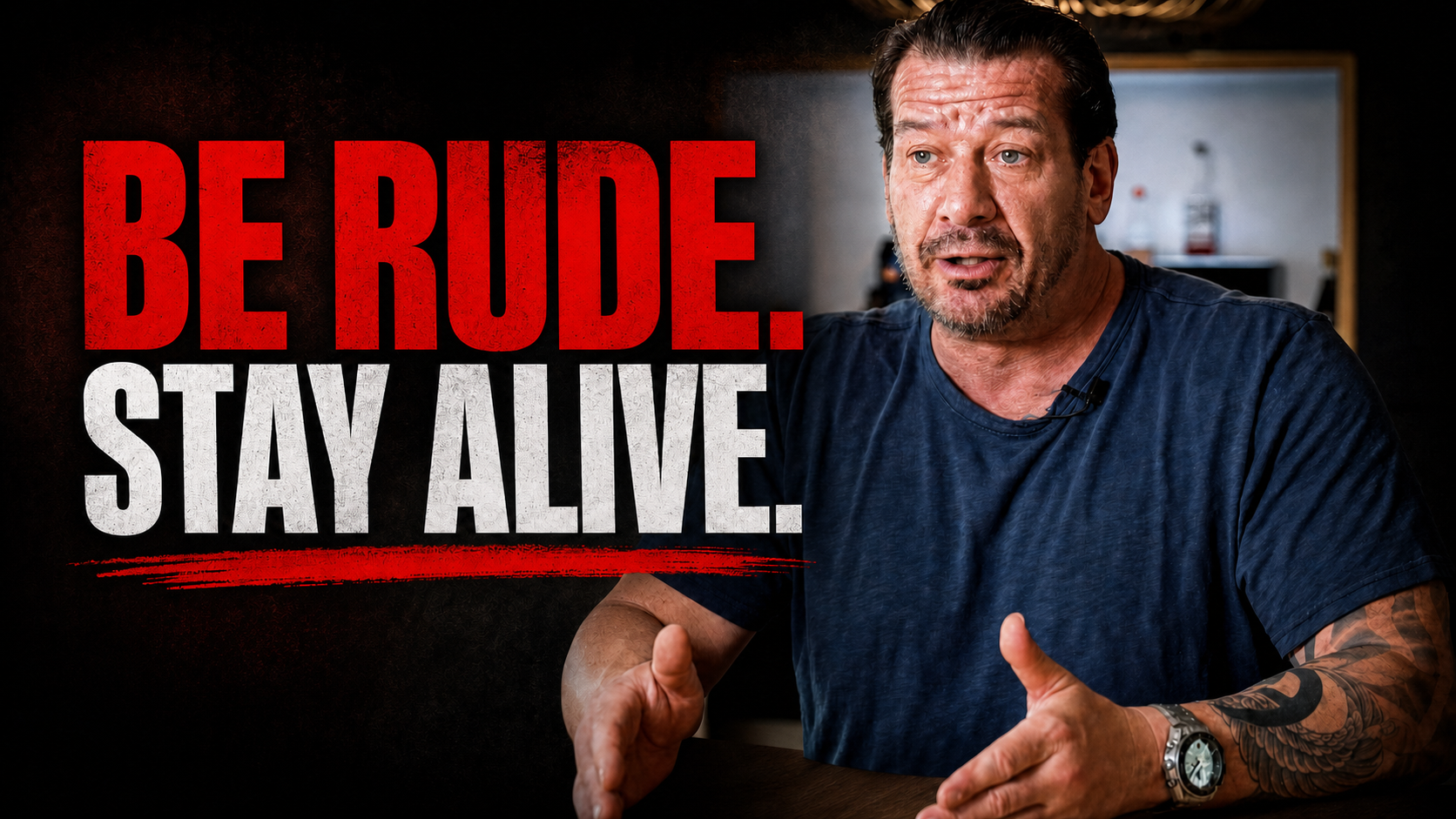
Be Rude. Stay Alive.
“Being nice” shouldn’t cost you your safety. This post breaks down why politeness can be dangerous, how to trust your intuition, and how non‑negotiable boundaries become your first line of defense.
Being polite is a courtesy. Protecting yourself is a priority.
From the time many women are little girls, they’re taught to smile, to be agreeable, to avoid “making a scene.” Say yes. Be helpful. Don’t be rude. Even when every internal alarm bell is ringing, that social conditioning can override instinct and create a dangerous hesitation right when fast action is required.
This isn’t about becoming hostile or cold. It’s about recognizing that your safety will never be worth less than someone else’s opinion of your manners.
In this post, I want to share three critical safety lessons: why being nice can become dangerous, how trusting your gut is backed by science—not superstition—and how setting non‑negotiable boundaries becomes your first line of defense.
When Being Nice Becomes Dangerous
Think about these moments:
A stranger asks you to help load something into their car.
Someone you don’t know calls your name in a dark parking lot.
You feel like you’re being followed, but you don’t want to “overreact.”
Your instinct whispers, “Get out of here.”
Your conditioning replies, “Don’t be mean.”
That gap between instinct and action is where danger lives.
People who intend harm are not looking for the strongest target; they’re looking for the easiest one. They look for compliance, not confrontation. If you’ve been trained your whole life to avoid conflict at all costs, you can appear—without even realizing it—like a more promising target.
Giving yourself permission to be “rude” when your safety is at stake is a radical act of self‑protection. You do not owe anyone:
Your time
Your help
Your attention
Your body
Especially not when something feels off.
“Be rude. Stay alive.” is not about being unkind. It’s about recognizing a simple truth: strangers are not entitled to your comfort, but you are entitled to get home safe.
The Science of Trusting Your Gut
Women’s intuition is often treated like a joke or a cliché. It isn’t. It’s neuroscience.
Your brain is constantly scanning your environment, taking in far more information than your conscious mind can process in real time. Microexpressions, subtle tone changes, shifts in body language, environmental anomalies—your nervous system notices these signals before you can put words to them.
That “weird feeling” in your stomach?
The hair standing up on your neck?
The sudden urge to create distance?
That’s your brain alerting you to a pattern that doesn’t match what “safe” usually looks like.
Here’s what makes many women more vulnerable: they’re repeatedly told they’re “too sensitive,” “too dramatic,” or “paranoid” for listening to those signals. Over time, they learn to doubt themselves. They feel pressure to stay, to stay quiet, to stay polite—until it’s too late.
You do not need a court‑approved level of evidence to walk away.
If something feels wrong, treat that feeling as valid data. If you’re wrong and it was nothing, you lost a few minutes of your day. If you’re right, you may have just saved your life. There is no downside to leaving a situation that doesn’t feel safe.
You don’t need permission to trust yourself.
You don’t need proof to leave.
Your discomfort is enough.
Boundaries: Your First Line of Defense
Boundaries are not just “relationship skills.” They are a safety strategy.
A boundary is a clear line that protects your physical, emotional, and relational space. It defines what you will and will not allow. Healthy boundaries:
Keep others from breaking in
Keep you from bleeding out
Predators understand this even if you don’t. They will test your limits long before they ever cross them. A “harmless” touch on the lower back, a crude joke, a persistent push after you say you’re not interested—these are not accidents. They are probes.
If you’re used to minimizing your own needs, you may excuse this behavior, laugh it off, or try not to “make it awkward.” That’s exactly what they’re hoping for.
Your safety depends on having non‑negotiables—lines that are not up for debate:
Physical violence
Emotional abuse
Coercion or forced intimacy
Not today. Not tomorrow. Not ever.
You have the right to say:
“I’m not comfortable with that.”
“I’m not doing that.”
“No.”
And stop there.
“No” is the end of the conversation, not the beginning of a negotiation. Anything you say after “no” is often you giving away your power in an attempt to manage someone else’s reaction.
Practicing Boundaries Before You Need Them
For many people, these statements feel anything but natural. That’s okay. Confidence is not a prerequisite for safety; practice is.
You can normalize these responses by rehearsing them out loud, the same way you’d practice any other skill:
Say “No, I’m not doing that” while looking at yourself in the mirror.
Role‑play scenarios with a trusted friend where you decline, disengage, or walk away.
Rehearse how you’ll exit a situation—what you’ll say, where you’ll go, who you’ll call.
The goal is to make your protective responses automatic, so when stress hits, you’re not searching for words. You already know what to say and do.
Healthy boundaries aren’t selfish. They’re the framework that protects your consent and communicates your self‑respect. Sometimes, to be truly selfless—to show up for the people who rely on you—you must first be willing to be “selfish” with your safety.
You cannot pour from an empty cup. You cannot protect others if you’re not here.
Safety Over Social Approval
At the end of the day, it comes down to this:
Your life matters more than someone else’s comfort.
Your safety matters more than looking “nice.”
Your instincts matter more than social expectations.
Be rude when you need to.
Trust your gut even when you can’t explain it.
Set boundaries that leave no room for negotiation.
Your safety is not negotiable.
If this message resonates with you, share it with someone who needs the reminder that they’re allowed to protect their peace, their body, and their autonomy—without apology.