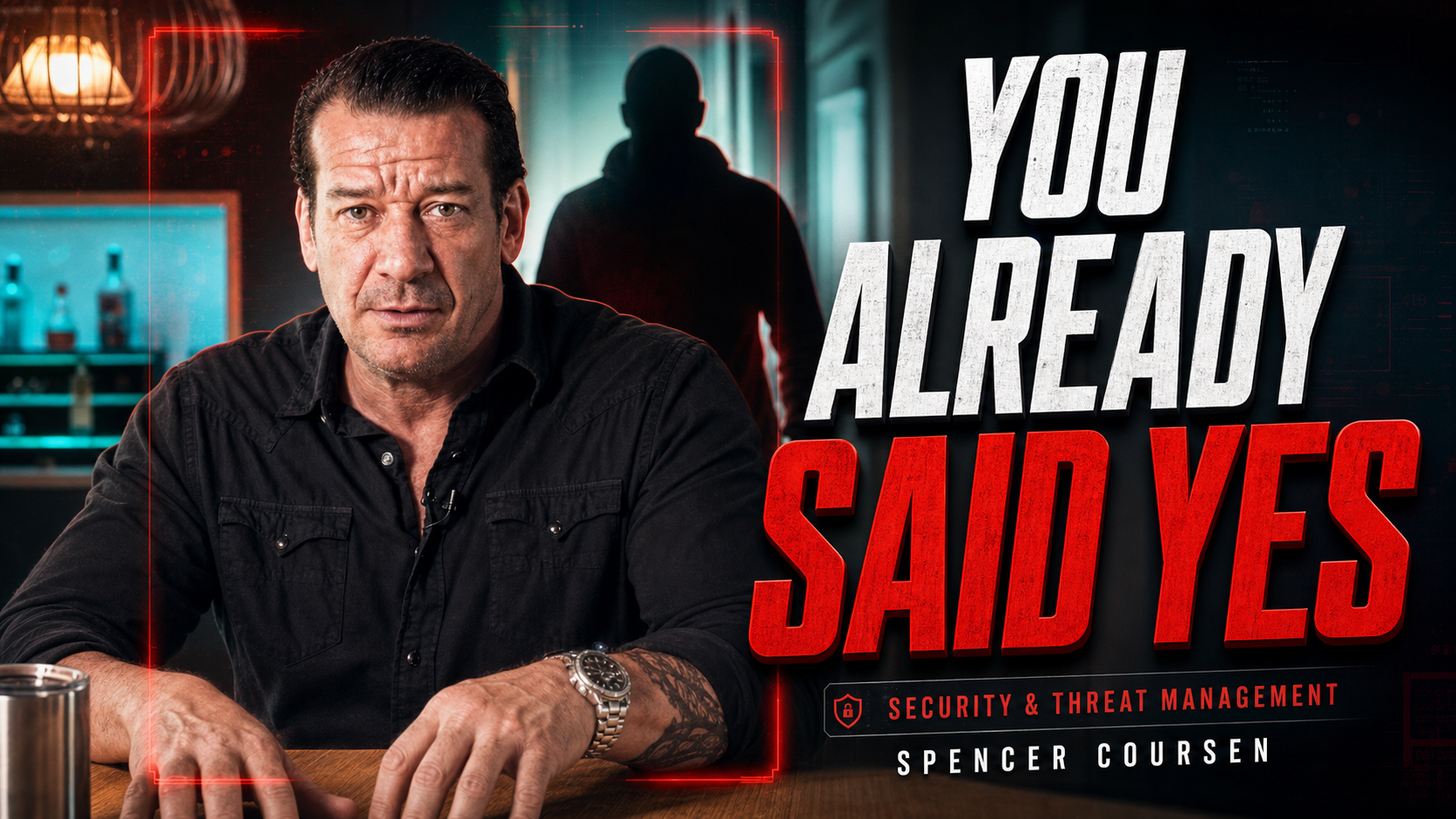
You Already Said Yes – How Predators Test Your Boundaries Before Violence
Predators rarely begin with obvious danger. They start with small, subtle violations of your boundaries that feel “too minor” to address. This article breaks down how predators test your resistance, why agreeability can be exploitable, and how clear boundaries can protect you long before violence is ever on the table.
Predators Don’t Start With Violence
A lot of people think danger begins at the moment of violence. In reality, most predators start with something far more subtle: permission. Not explicit permission, but behavioral permission—boundaries crossed, hesitations ignored, and “no” softened into politeness. A boundary without a consequence is just a preference, and that’s exactly what predatory people look for.
Real-world predation often relies less on force and more on compliance. Before anything escalates, predators are asking one core question: Will your boundaries hold, especially under stress?
What Predators Are Really Looking For: Access and Compliance
Predators look for access, not chaos. One of the biggest myths about predators is that they’re impulsive and reckless. Many are patient, observant, socially intelligent, and highly adaptive to their environment. The people easiest to manipulate are often those with the deepest desire to be liked.
Most predators don’t start big—they start small. Can they step a little too close? Can they make you uncomfortable without consequence? Can they use your desire to be liked against you? Each micro interaction helps them assess how much resistance they’ll face if they escalate.
Subtle Boundary Tests Most People Miss
Boundary testing is usually quiet and incremental. The more experienced the predator, the less obvious the behavior will be. It often looks like everyday social interaction, which is why so many people dismiss it. Common boundary tests include:
Standing just a little too close
Touching when it’s not necessary
Ignoring a small “no” or hesitation
Asking questions that feel intrusive
Creating fast, forced intimacy
Oversharing to pull you into their confidence
Positioning you into isolation or situations where saying no feels awkward
Sometimes it comes wrapped in charm or humor. Other times it shows up as vulnerability or pressure. The objective is always the same: discover whether your boundaries will bend, break, or hold.
Why Agreeability Can Quietly Increase Your Vulnerability
Agreeability itself is not weakness. Highly agreeable people are often empathetic, cooperative, and emotionally intelligent—these are strengths. The vulnerability appears when agreeability goes unchecked.
If someone is conditioned to prioritize being liked, avoiding conflict, keeping the peace, and protecting other people’s feelings over their own safety, predators notice quickly. They recognize that agreeable people hesitate to be direct, to create discomfort, or to say “no” clearly. Many will choose to be uncomfortable rather than risk being perceived as rude, and predatory individuals exploit that hesitation.
The Power of Productive Disagreeability
There is real power in healthy disagreeability. This doesn’t mean becoming aggressive; it means becoming clear. Productive disagreeability looks like:
The willingness to say “no” without apology
The willingness to create friction when a boundary is crossed
The willingness to enforce limits, even when it feels socially awkward
Some of the safest people are not the strongest physically—they’re simply the hardest to manipulate. They leave early, push back on questionable behavior, and disengage without feeling the need to justify themselves. Because resistance increases cost, predators usually seek the path of least resistance. When you raise the cost of targeting you, they are more likely to move on.
How Social Conditioning Makes Us Easier to Target
A big part of this vulnerability comes from social conditioning. Many of us were raised to:
Be nice and accommodating
Avoid “making a scene”
Not hurt anyone’s feelings
Give people the benefit of the doubt
Predators exploit these scripts consistently. A stranger ignores your “no.” A coworker pushes a personal boundary. A date applies pressure. Someone keeps stepping into your space.
A healthy person notices discomfort and adjusts. A predatory person often does the opposite—they escalate, testing whether your boundary will weaken once you feel pressured, embarrassed, or obligated.
Discomfort Is Data: Trusting Your Intuition
Discomfort is data. It is not proof of danger, but it is a signal worth paying attention to. The key insight is this: the behavior itself is often not the point—the reaction is.
If someone crosses a line and nothing happens, they learn something about you.
If they pressure you and you apologize, they learn something else.
If you minimize your own discomfort to preserve harmony, they learn that your boundaries are negotiable.
Compliance compounds. Each unchallenged moment becomes a stepping stone toward escalation. Danger doesn’t begin at the moment of violence; it begins at the moment someone realizes your boundaries can be pushed without consequence.
Clear Boundaries, Clear Communication, Clear Self-Respect
The goal here is not paranoia; it’s clarity. Clear boundaries, clear communication, and clear self-respect are some of the most powerful safety tools you have. You don’t need a speech and you don’t need permission to use them.
“No” is a complete sentence. One of the most important skills you can develop is the ability to tolerate social discomfort—those tense, awkward moments where you choose safety over likability. Many dangerous situations escalate when someone ignores their instincts to avoid offending another person.
Assertiveness Without Aggression: Phrases That Protect You
Assertiveness does not require aggression. Simple, calm statements often work best, especially early in an interaction. Examples include:
“I’m not comfortable with that.”
“Please step back.”
“I said no.”
“I’m leaving.”
“No.”
These phrases create friction and signal that your boundaries are real, not theoretical. The more friction you create, the more you disrupt a predator’s momentum and force them to reassess whether you are worth the effort.
Boundary Testing as a Pre‑Incident Indicator
Threat management isn’t just about responding to violence—it’s about recognizing the patterns that lead to violence before they’re allowed to unfold. Boundary testing is often one of the earliest pre-incident indicators.
Not every rude person is dangerous, but repeated disregard for your boundaries, especially when it escalates, should always get your attention. Healthy people respect boundaries. Predators study them.
Choosing Safety Over Likability
The goal of this work is not to burden you with fear but to empower you to become harder to manipulate. When you understand how predatory behavior unfolds, you can trust your instincts, recognize patterns, and respond earlier.
Sometimes protecting yourself means being willing to disappoint someone. Safety and likability are not always aligned. When you’re forced to choose, choose safety. You may never know what you prevented—but that’s the point.

Full Disclosure Isn’t The Threat. We Are.
Is humanity emotionally intelligent enough to handle the biggest truth in human history? In this breakdown of Disclosure Day, Spencer Coursen explains why the real threat isn’t extraterrestrial, it’s our ill‑prepared response — from market volatility to institutional distrust and public panic.
What Disclosure Day Gets Right — And What It Leaves Out
I saw the new Disclosure Day movie. Twice.
What surprised me most is that I don’t think it’s a movie about aliens at all. It’s a movie about us.
At its core, Disclosure Day asks a question it never fully answers: Is humanity emotionally intelligent enough to handle the biggest truth in human history? The film gives us spectacle and suspense, but the deeper implications of that question are where the real risk lives.
What Comes After the Headlines?
If something like Disclosure Day were to happen in real life, the disclosure itself would only be the first domino.
The next wave would be geopolitical instability: nations reframing alliances, rushing to control narratives, and jockeying for strategic advantage around whatever new truth had been revealed. Financial markets would react, often irrationally, with spikes in volatility driven as much by fear and speculation as by facts.
Then comes the deeper erosion of trust in governments and institutions. Once the public understands that something this consequential was known and withheld, every existing fracture in public trust widens. The questions would start immediately:
Who knew?
When did they know?
Why did they choose to keep it secret?
Who benefited from keeping it hidden?
Those questions would trigger hearings, commissions, and investigations. Compared to the magnitude of that process, everything from the McCarthy hearings to the Warren Commission to the 9/11 investigations might look like a very special episode of Sesame Street.
It’s Not the Disclosure That Frightens Me
I want to know the truth as much as anyone. Maybe more. I’m the guy who had the “I Want to Believe” poster hanging in his college dorm room.
But it’s not the disclosure that worries me. It’s our ill‑prepared response to that kind of consequential truth.
We like to imagine that more information automatically leads to better decisions. In reality, when people are emotionally unprepared, more information can mean more panic, more polarization, and more opportunity for bad actors to exploit confusion. The bigger the truth, the more pressure it puts on every weak point in our systems — political, economic, and psychological.
Emotional Intelligence as a Preparedness Gap
So the real question isn’t “Will we ever get full disclosure?”
The real question is: “Will we be emotionally intelligent enough to handle it when it comes?”
Preparedness is usually framed in terms of logistics and resources: plans, protocols, contingency playbooks. Those things matter. But Disclosure Day highlights a different kind of preparedness gap — emotional readiness.
If a world‑changing truth arrives and we are emotionally ill‑equipped to process it, we risk reacting in ways that amplify the harm:
Rushing to easy answers instead of grappling with complexity
Turning uncertainty into blame and scapegoating
Collapsing into cynicism and withdrawing from civic responsibility
That is the threat I see woven between the lines of the movie.
The Way Truth Arrives Matters
If a real Disclosure Day ever happens, I hope it unfolds organically through the lenses of empathy, preparation, and understanding — not as a forced, chaotic event that drops on a population emotionally unprepared to carry that kind of weight.
Truth can be liberating. It can also be destabilizing. The difference often comes down to how it’s communicated, who is trusted to share it, and whether people feel supported as they absorb it. Disclosure without emotional scaffolding isn’t transparency; it’s shock.
So, Are We Ready?
In the end, Disclosure Day isn’t just a speculative sci‑fi scenario. It’s a mirror held up to how we handle uncomfortable truths right now — about security, about leadership, about the systems we rely on.
The film made me ask a simple but uncomfortable question:
If the biggest truth in human history landed tomorrow, are we ready for it?
Maybe the better question is: What would it take to become ready?
That’s my read. What about yours? I’d love to hear your thoughts — are you more concerned about what we might learn, or how we might respond when we finally do?
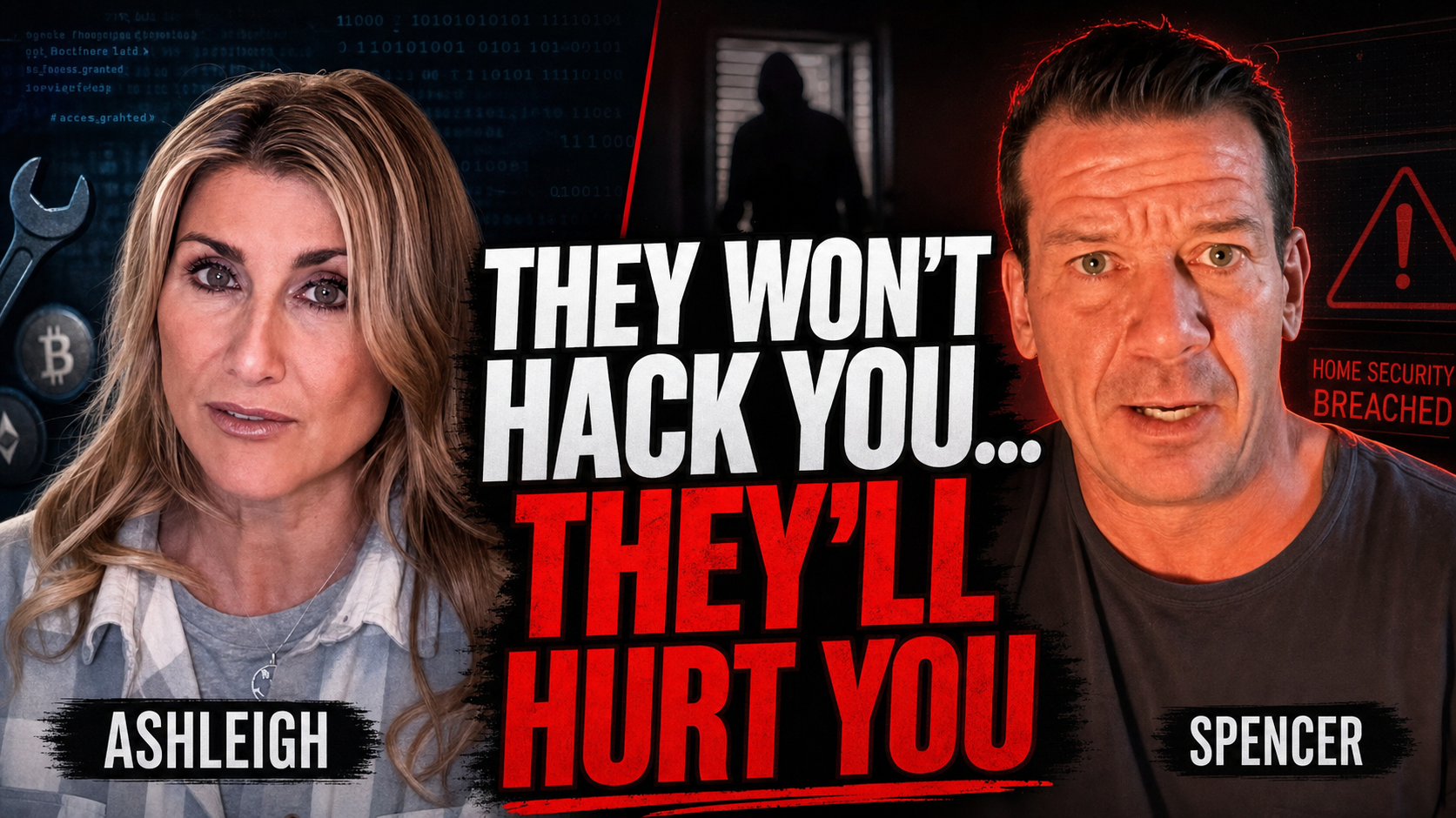
They Won’t Hack You… They’ll Hurt You:
Cybercrime isn’t just about firewalls and passwords anymore—it’s about you. As more of our wealth and identity moves into the digital world, criminals are quietly shifting from keyboards to coercion, using “wrench attacks” and proxy targeting to force victims and their families to hand over access at gunpoint, under torture, or through emotional leverage. This article breaks down how that evolution happened, why your online footprint makes you easier to find in the real world, and the practical steps—like family safe words, duress phrases, the FOIL assessment, and a simple 9 p.m. routine—that can dramatically increase your safety without turning your life into a fortress.
How Modern Criminals Turn Your Digital Life into Physical Danger
🎯 Expect to learn…
How cybercriminals are shifting from keyboards to coercion, why “wrench attacks” and proxy targeting are exploding as real-world threats, and what that means for your everyday safety. You’ll see how simple changes to your habits, communication, and home routines can dramatically reduce your risk—without living in fear.
The New Face of Digital Crime
For years, “cybersecurity” made most of us think about firewalls, antivirus software, and complex passwords.
Today, the real threat isn’t always a hacker sitting behind a screen—it’s a criminal willing to show up in person.
Instead of trying to crack your bank or crypto exchange from the outside, attackers are increasingly going “old school”: kidnapping, coercion, torture, and threats against you or the people you love in order to force you to hand over access.
This is the world of wrench attacks and proxy target attacks—and understanding the difference could be the thing that keeps you safe.
What Is a Wrench Attack?
The term “wrench attack” comes from a webcomic that pokes dark fun at the security world: why spend months trying to break encryption when you can just hit someone with a wrench until they give up their password?
In practice, a wrench attack is any situation where:
Violence or the threat of violence is used to obtain passwords, codes, or access.
The victim is forced to unlock a device, transfer crypto, or disable security.
The criminal relies on your cooperation, not their hacking skill, to beat the system.
Your bank app, your crypto wallet, your email, and your password manager are all “secure” on paper.
But if someone can force you to unlock them, the system works perfectly—for the attacker.
The Rise of Global Crypto Torture Networks
The incentives are obvious: digital assets are portable, hard to trace, and can often be moved quickly across borders. That makes high‑net‑worth crypto holders especially attractive targets.
One case discussed in the conversation involves an Italian crypto holder who traveled to New York after publicly sharing plans and appearing at conferences. He was lured to an expensive townhouse, locked in, and tortured for weeks as criminals tried to force access to his digital wallet.
Key takeaways from cases like this:
Visibility equals vulnerability. Publicly posting travel, wealth, and crypto involvement dramatically increases risk.
They don’t need to hack the platform—only you. Your knowledge of your own security becomes their leverage.
They buy local muscle. Sophisticated organizers can be continents away while hiring local “thugs” to do the dirty work.
This isn’t a horror movie pitch. It’s a logical evolution of crime following money into the digital realm.
What Is a Proxy Target Attack?
A proxy target is someone who isn’t the primary goal, but is connected to the person who is.
Instead of going directly after the wealthy executive, influential personality, or high‑value crypto holder, criminals target:
Parents
Spouses or partners
Children
Elderly relatives
Why? Because the emotional leverage is often stronger. A threat to someone you love can be far more compelling than a threat to yourself.
Past examples of this dynamic include:
Executives kidnapped overseas because their employer has kidnap-and-ransom insurance.
Journalists targeted to pressure media organizations or governments.
Family members threatened to force political or financial concessions.
In the Nancy Guthrie case, researchers suggest her disappearance may fit this pattern—where an older family member becomes the pressure point for a more prominent or affluent relative.
Your Online Life Is a Blueprint for Attack
Most people vastly underestimate how much actionable intelligence they give away online.
Even if no single post is “dangerous,” taken together they can reveal:
Where you live and work
When you travel and when your home is empty
Your family structure and close relationships
Your regular routines (gym, coffee shop, commute)
Security “challenge question” answers (first car, high school, pet names, birthdays)
True crime communities know this well—people crowdsource investigations by going frame by frame through videos and posts. Criminals do the exact same thing, just with a different goal.
If a stranger can answer your password reset questions just by scrolling your feed, your life is overshared.
Safe Words and Duress Phrases: Communication That Can Save You
One of the most practical tools discussed in the interview is the idea of having both safe words and duress phrases within your family.
There are two layers:
Authentication word or phrase
Confirms that the person you’re communicating with is genuinely acting of their own free will.
Example: If a family member calls asking you to urgently send money, you verify with an agreed‑upon safe word.
Duress phrase
A natural‑sounding phrase that signals “I am not okay” if you’re being coerced and can’t speak freely.
It should be something only close family would recognize as out of character or meaningful.
Example: Mentioning a food you’re allergic to as something you just ate, or using an unusual nickname you never use.
The key is that the phrase must sound normal to a captor, but deeply wrong to the person who knows you.
Building this into a family emergency readiness plan turns your everyday communication into a quiet, powerful safety net.
The FOIL Method: A Simple Audit for Everyday Security
Spencer introduces a simple, memorable framework adapted from a math concept called FOIL – First, Outer, Inner, Last.
You can use it to assess your security—home, work, routines, even your online presence.
F – First Impressions
Ask: How do I appear to a stranger or a potential attacker?
Do I look oblivious, distracted, wealthy, or well‑protected?
Does my online presence scream “I have money” or “I overshare”?
O – Outer Layer
Ask: What does the outside of my life look like?
Is my home or workplace well lit and observable, or hidden and isolated?
Are there visible cameras, access controls, or signs that security is taken seriously?
I – Inner Layer
Ask: What is it like once someone is inside my space or routine?
Are there clear sightlines in parking areas and hallways?
Do I walk through blind corners, dark stairwells, or poorly monitored areas alone?
L – Lasting Impressions
Ask: What worries me the most that I’ve done the least about?
Is it your commute, your kids’ school travel, your online exposure, your crypto, your home at night?
That nagging concern is often where your most real vulnerability lives.
Apply FOIL to your home, your family’s routines, your social media, and your finances. You’ll quickly see where minor changes could yield major increases in safety.
The 9 p.m. Routine That Actually Moves the Needle
You don’t need to live in a fortress to be safer. You do need consistency.
A simple nightly routine around 9 p.m. can include:
Locking all doors and checking windows
Activating alarms and ensuring motion lights are on
Confirming cameras are working and recording
Quickly scanning footage or logs for anything unusual
Noting vehicles, patterns, or people that don’t fit your normal baseline
Over time, this gives you a strong sense of what “normal” looks like on your property—making genuine anomalies stand out fast.
Why Bragging About Security Is a Security Risk
One of the subtler insights in the conversation:
Talking publicly about not using security—or flexing what you have and how little you protect it—is practically an invitation.
Examples of what not to do:
Announcing you’ve fired your security team or “don’t believe” in protection.
Posting screenshots of large crypto purchases or balances.
Broadcasting real‑time travel, hotel locations, or private events.
A better approach for public figures and anyone with visible wealth:
Calmly state, “I take my security very seriously.”
Never share details of what that looks like.
Save specifics for private conversations with professionals and trusted family.
Criminals calculate risk. Your job is to make that math look bad from their point of view.
You Don’t Need Fear—You Need a Plan
The most important mindset shift here is this:
You do not need to live in fear. You do need to participate in your own protection.
That means:
Being skeptical when something feels “off”
Trusting your instincts over your desire to be polite
Reducing unnecessary exposure—online and offline
Giving your family simple tools like safe words and duress phrases
Using FOIL and a nightly routine to continuously tighten your security
Your unwillingness to offend someone should never be stronger than your willingness to defend yourself.
This Isn’t Love: The Psychology of Fixation, Limerence, and Stalking
Most stalkers don’t start as monsters. They start as people who can’t let go. This piece breaks down how fixation, limerence, and entitlement quietly evolve into stalking, and why understanding that progression is critical for protecting your boundaries and your safety.
Most stalkers don’t start as monsters. They start as people who can’t let go.
An unanswered text.
A relationship that ended.
A connection that never really existed outside of one person’s mind.
Somewhere along the way, attachment becomes fixation, fixation becomes pursuit, and pursuit can become stalking. One of the most dangerous misconceptions about stalking is that it’s about love. It’s not. More often than not, it’s about control, rejection, identity, humiliation, emotional dependency, and unresolved psychological wounds projected onto another person.
This article breaks down what fixation actually is, how it escalates, why limerence is not the same as obsession, and the warning signs you cannot afford to ignore.
What Fixation Really Is (And Why It Shrinks Your World)
In behavioral threat assessment, fixation is an unhealthy and increasingly rigid preoccupation with a person, cause, or idea.
The key word is rigid.
Healthy attention expands your life. It adds connection, curiosity, and growth. Fixation shrinks your world down until one individual becomes everything. Thoughts become repetitive. Emotions become dependent. Daily life starts to orbit around access, acknowledgment, or proximity to that target.
One of the most important patterns we see in casework: fixation often intensifies after rejection. Not necessarily because the relationship was meaningful, but because rejection threatens identity. The person doesn’t just feel “dumped.” They feel dismantled.
So they don’t grieve the loss. They try to restore the fantasy.
Why Some People Become Fixated
There isn’t a single path into fixation, but there are common ingredients:
Loneliness and isolation
Unresolved trauma or attachment wounds
Depression and low self‑worth
Narcissistic injury or humiliation
Fantasy as a coping mechanism
For some individuals, fantasy feels safer than reality. Reality is unpredictable and uncontrollable. Fantasy can be edited, re‑written, and replayed on demand.
Modern technology has supercharged this dynamic. Today, someone can build a one‑sided relationship indefinitely: watching stories, tracking routines, studying posts, and interpreting every caption as a private message “meant” for them. This is where parasocial attachment comes in—a one‑sided emotional bond where connection feels real even when it isn’t.
Combine loneliness, access, and imagination, and fixation can accelerate quickly.
Limerence: When Infatuation Acts Like Addiction
Not all intense attachment is dangerous. There is a psychological state called limerence that, on the surface, can look a lot like love:
It feels intense
It’s all‑consuming
It’s emotionally powerful
But it’s not love. It’s closer to addiction.
Limerence is driven more by fantasy than reality. It’s an obsessive emotional dependence on a specific person (the “limerent object”), and everything starts to revolve around them.
Cognitive Signs
Intrusive thoughts you can’t shut off
Constant mental replay of interactions
Reading meaning into every word, pause, or emoji
Interpreting neutral behavior as coded signals
The person doesn’t just think about someone—they orbit them.
Emotional Signs
Extreme highs from small crumbs of attention
Crushing lows from silence, distance, or delayed replies
Mood becomes dependent on access to that person
They’re no longer regulating internally. They’re regulating through their target.
Behavioral Signs
Repeated, escalating contact attempts
“Accidental” encounters or drive‑bys
Rereading old messages and replaying conversations
Monitoring social media, tracking patterns, staying “close” without context
In more escalated cases, these behaviors can cross into stalking. At that point, the goal is no longer connection. It’s access.
When Limerence Turns Into Obsession
What makes limerence dangerous is distortion.
Neutral behavior gets misread as interest.
Silence gets reframed as “they’re thinking about me.”
Clear rejection gets minimized, denied, or completely ignored.
The limerent person builds a future in their head that does not exist in real life. Even when boundaries are clearly set, they continue to hold onto hope—because the attachment isn’t grounded in who the other person actually is, but in what that person represents: validation, excitement, relief, escape, emotional regulation.
This is the tipping point into obsession.
Limerence can exist without violating boundaries. Obsession cannot.
The moment entitlement shows up—
“I need access.”
“They owe me a response.”
“I deserve their attention.”—
the risk escalates. The person is no longer respecting autonomy. They’re trying to override it.
Boundary Violations, Manipulation, and Hoovering
As entitlement grows, you may see:
Emotional, digital, or physical boundary violations
Agitation and anger when access is restricted
Guilt trips and emotional pressure
Threats of self‑harm to force engagement
If that fails, some individuals pivot into hoovering—sudden affection, urgency, or crisis meant to vacuum you back into contact. It’s not about genuine change. It’s about re‑establishing access.
Here’s the part most people miss: limerence is not about the person. It’s about the feeling that person provides. Just like a slot machine, it thrives on intermittent reinforcement—unpredictable hits of attention that keep the cycle alive.
You are not only dealing with emotion. You are dealing with compulsion.
Why Clear, Consistent Boundaries Matter
Compulsion does not respond to logic. It responds to access.
This is why clear and consistent boundaries are critical. Inconsistency doesn’t calm limerence; it feeds it.
Answering “just this one time”
Sending a “kind closure” message after no contact
Responding to guilt or self‑harm threats under pressure
All of these can unintentionally reinforce obsessive patterns.
Consistency is not cruelty. It is protection—for you and, ironically, for the other person’s chance at reality.
Stalking: When Persistence Becomes Escalation
Stalking rarely starts with explicit threats. It starts with persistence:
Repeated calls and texts
Showing up “by coincidence”
Unwanted appearances at work, gym, or home
One of the most dangerous mistakes people make is confusing persistence with passion.
“It’s romantic.”
“They’re just really into me.”
“They won’t give up.”
Sometimes, what looks like devotion is actually boundary violation in disguise.
What makes stalking dangerous isn’t just frequency. It’s escalation.
Emotional separation collapses
Mood depends entirely on access and response
Identity fuses with pursuit
Rejection doesn’t create closure—it creates activation
Stalking often intensifies after breakups, humiliation, or perceived abandonment because the individual isn’t just losing a relationship. They feel like they’re losing the version of themselves that existed inside that relationship.
This is where grievance forms.
Fixation + Grievance: The High‑Risk Combination
In threat assessment, one combination stands out:
Fixation + Grievance
Fixation creates focus.
Grievance creates justification.
The person begins to see themselves as the victim of betrayal, injustice, or destiny denied. Their internal narrative may start to leak out in:
Concerning statements and veiled threats
Cryptic or emotional social media posts
Dramatic language about fate, destiny, or payback
Rationalizing revenge as “fair” or “necessary”
You may also see pathway behaviors:
Monitoring routines
Testing boundaries
Approaching locations
Using third parties to make contact
These are not random. They are indicators. Dangerous behavior rarely appears out of nowhere. It develops.
Why Some People Move On While Others Spiral
Two people can experience the same breakup and respond in completely different ways. The difference often comes down to identity.
Emotionally healthy individuals can feel hurt, angry, or disappointed without losing their core sense of self. It hurts—but it doesn’t destroy them.
Fixated individuals attach deeper meaning to the connection:
“This person is my worth.”
“This relationship is my purpose.”
“Without them, I am nothing.”
When that collapses, it doesn’t feel like loss. It feels like annihilation. Instead of accepting reality, they try to rebuild the fantasy.
Healthy grieving lets go. Fixation holds on.
Longing Is Human. Boundary Violations Are Not.
This conversation is not about demonizing people who are struggling. Longing is human. Heartbreak is human. Limerence, in mild forms, is human.
But boundaries matter. Reality matters. Autonomy matters most.
One of the clearest danger signs is this:
When someone stops respecting another person’s right to disagree, detach, or say no.
From a threat‑management standpoint, early intervention matters. The longer fixation is reinforced, the harder it is to break.
Key Takeaways: Awareness Over Paranoia
The goal is not to make you paranoid. The goal is to make you aware.
Fixation narrows perception.
Narrowed perception creates tunnel vision.
Tunnel vision can distort judgment, justify boundary violations, and in some cases escalate into stalking or violence.
Understanding the differences between connection, attachment, fixation, limerence, and obsession isn’t just academic. It’s practical protection—for yourself, your relationships, and the people who rely on you.
What You Can Do Next
If any of this feels uncomfortably familiar—for you or for someone in your orbit—consider the following steps:
Take your own discomfort seriously. Your intuition is data.
Set and maintain clear, consistent boundaries.
Document escalating behaviors or boundary violations.
Reach out to qualified professionals, advocates, or law enforcement if you feel unsafe.
If you recognize limerence in yourself, seek therapy or support focused on attachment, self‑worth, and emotional regulation.
If you want more breakdowns on threat management, human behavior, and real‑world safety, I share regular insights on my YouTube channel and across my platforms. Share this article with someone who might need it—and as always, protect what matters most.
Why “We Can’t Afford Security” Is the Most Expensive Lie in Business
Catastrophic failures rarely start with chaos; they start when leadership quietly cuts security to “save costs.” This article explains how treating safety like a budget line item creates foreseeable risk, legal liability, and preventable harm, and outlines practical steps leaders can take to strengthen security, risk management, and duty of care before it is too late.
Every catastrophic failure begins long before headlines, lawsuits, or public outrage.
It starts in a quiet conference room where someone looks at a spreadsheet and decides that safety is “too expensive.”
In my work as an expert witness, I am brought in after something has already gone terribly wrong—after people are hurt, after organizations are facing lawsuits, and after leadership is wondering how it all went so far off the rails.
What I see, over and over again, is that security is almost always the last line item on the budget. It is treated as a negotiable expense instead of a non‑negotiable responsibility. That decision is where failure really starts.
When Safety Becomes a Cost Instead of a Duty
Catastrophic failure doesn’t begin with chaos. It begins with a quiet decision to treat safety as an expense instead of a responsibility.
On paper, it sounds reasonable:
“We’re tightening the budget this quarter.”
“We haven’t had an incident in years—do we really need this level of security?”
“We’ll revisit this next fiscal year.”
Nothing about those statements feels reckless in the moment. In fact, they often sound prudent, even responsible. But the problem is this: when prevention is reduced to a budget line item, risk does not disappear. It accumulates.
You’re not eliminating risk; you’re deferring it.
You’re not saving money; you’re shifting the cost to a later date—when it will be far more expensive, far more public, and far more painful.
Security Doesn’t Fail All at Once
We like to imagine security failures as dramatic, sudden events—an attack, a breach, a crisis that erupts out of nowhere.
In reality, security rarely fails in a single moment. It erodes gradually through a series of compromises that each feel rational at the time.
A position goes unfilled “for just a few months.”
Training is postponed because “everyone’s too busy right now.”
A system upgrade is delayed because “it’s not in this year’s budget.”
A policy is relaxed because “we trust our people and don’t want to overreact.”
None of those decisions, taken alone, feel like negligence. They feel like trade‑offs.
But risk doesn’t care how rational your justification sounded in the meeting.
Each small compromise widens the gap between what should be happening and what actually is. Over time, that gap becomes the space where bad things happen.
The Hidden Cost of Cutting Safety
Organizations do not save money by cutting safety.
They defer accountability.
Eventually, the unpaid bill shows up in one of three forms:
Lives
Lawsuits
Or both
When something goes wrong—an assault on a property, a preventable shooting, a major workplace incident—the question is never just “What happened?”
It quickly becomes:
“What did leadership know?”
“What should they have done?”
“What reasonable steps did they choose not to take?”
And this is where the earlier “cost savings” decisions come back with interest.
The legal system, the media, and the public will all ask:
Was this risk foreseeable?
Were reasonable measures available?
Did the organization choose not to implement them to save money, time, or inconvenience?
When the answer is yes, that cost is no longer a line item. It’s a verdict.
Foreseeable Risk vs. “We Didn’t Know”
One of the most common defenses I hear is, “We had no idea something like this could happen.”
But in many cases, that simply isn’t true.
There were prior incidents on or near the property.
There were internal reports, complaints, or observations about unsafe conditions.
There were known vulnerabilities that had been discussed but not addressed.
In threat management and security, foreseeability is a key concept.
If a reasonable person in your position could anticipate the risk, then you are expected to act on it.
Choosing not to invest in appropriate security measures doesn’t erase the risk.
It documents your decision not to address it.
How Risk Accumulates Inside Organizations
Think of risk like water behind a dam.
No single crack is catastrophic by itself.
But every ignored leak, every postponed repair, every “we’ll get to it later” conversation adds pressure.
Inside organizations, risk accumulates through:
Outdated policies that don’t reflect current threats or realities
Understaffed security teams stretched beyond reasonable capacity
Lack of training for front-line staff who are the real first responders
Poor communication between leadership, legal, HR, and security
Complacency after long periods without visible incidents
From the inside, it feels like business as usual.
From the outside—especially after an incident—it looks like a pattern of neglect.
The Illusion of “We’ve Been Fine So Far”
One of the most dangerous beliefs in any organization is:
“We’ve done it this way for years and nothing bad has happened.”
That statement confuses luck with safety.
Just because no one has slipped yet doesn’t mean the floor isn’t wet.
Just because no one has attacked yet doesn’t mean your access points aren’t vulnerable.
Just because no incident has been reported doesn’t mean there is no problem.
Most systems under stress don’t fail instantly.
They fail after a long period of silent strain.
If your justification for cutting security is “nothing’s happened yet,” what you are really saying is:
“We’re betting our people’s safety and our organization’s future on luck.”
That’s not strategy. That’s wishful thinking.
Responsibility Lives at the Top
Security failures are often blamed on the last person in the chain—the guard on duty, the employee on shift, the contractor at the door.
But the real origin of failure is rarely at the perimeter.
It’s in the boardroom.
Leadership sets:
The priorities
The budgets
The policies
The culture around safety
If safety is framed as a burden, a nuisance, or an obstacle to productivity, that message filters down.
If security is framed as integral to operations and duty of care, that message filters down too.
You can’t expect front-line personnel to prioritize what leadership treats as optional.
From Expense to Obligation: Reframing Security
To reduce catastrophic risk, organizations must reframe how they think about security.
Security is not:
A luxury to add when times are good
A checkbox to satisfy insurance or compliance
A “nice to have” if the budget allows
Security is:
A core operational function
A legal and ethical duty to those in your care
A direct reflection of your organization’s values
When you make that shift—from expense to obligation—you start asking different questions:
“What risks are we responsible for managing?”
“What level of protection is reasonable given those risks?”
“What would we be expected to explain or defend in court after an incident?”
Those are uncomfortable questions.
But they are far less uncomfortable than the consequences of never asking them.
Practical Steps: Building a Culture That Prevents Failure
Moving from reactive to proactive doesn’t require fear—it requires structure.
Here are practical steps leadership can take:
Conduct a realistic risk assessmentBring in qualified professionals to evaluate your current security posture, foreseeable threats, and existing vulnerabilities. Not a box‑checking exercise—an honest assessment.
Align security with mission and valuesMake clear, in writing and in practice, that safety is non‑negotiable. Tie security standards to your duty of care, not to quarterly convenience.
Invest in training, not just hardwareCameras and access control systems are tools. People are the operators. Without training, policies, and clear expectations, technology alone will not save you.
Create clear reporting pathwaysEncourage employees and customers to report concerns early. Make it simple, safe, and stigma‑free to say, “Something feels off.” Early reporting is one of the most powerful forms of prevention.
Review incidents and near‑misses honestlyTreat near‑misses as gifts, not annoyances. They are early warnings that allow you to correct course before someone gets hurt or a lawyer gets involved.
Protect the budget for preventionBuild security into your operational baseline so it can’t easily be slashed when times get tight. Cutting prevention is the most expensive “savings” you will ever find.
The Real Question: What Will It Cost You If You Don’t?
Every organization has a budget. Every leader feels pressure to reduce costs.
But some cuts are different.
When you cut security, you are not trimming fat—you are removing structural support.
The question is not, “Can we afford security?”
The real question is, “Can we afford the consequences of not having it?”
Because in the end, catastrophic failure is not an accident.
It’s the final chapter in a series of quiet decisions to treat safety like a number on a spreadsheet instead of a responsibility to human beings.
That’s where failure starts.
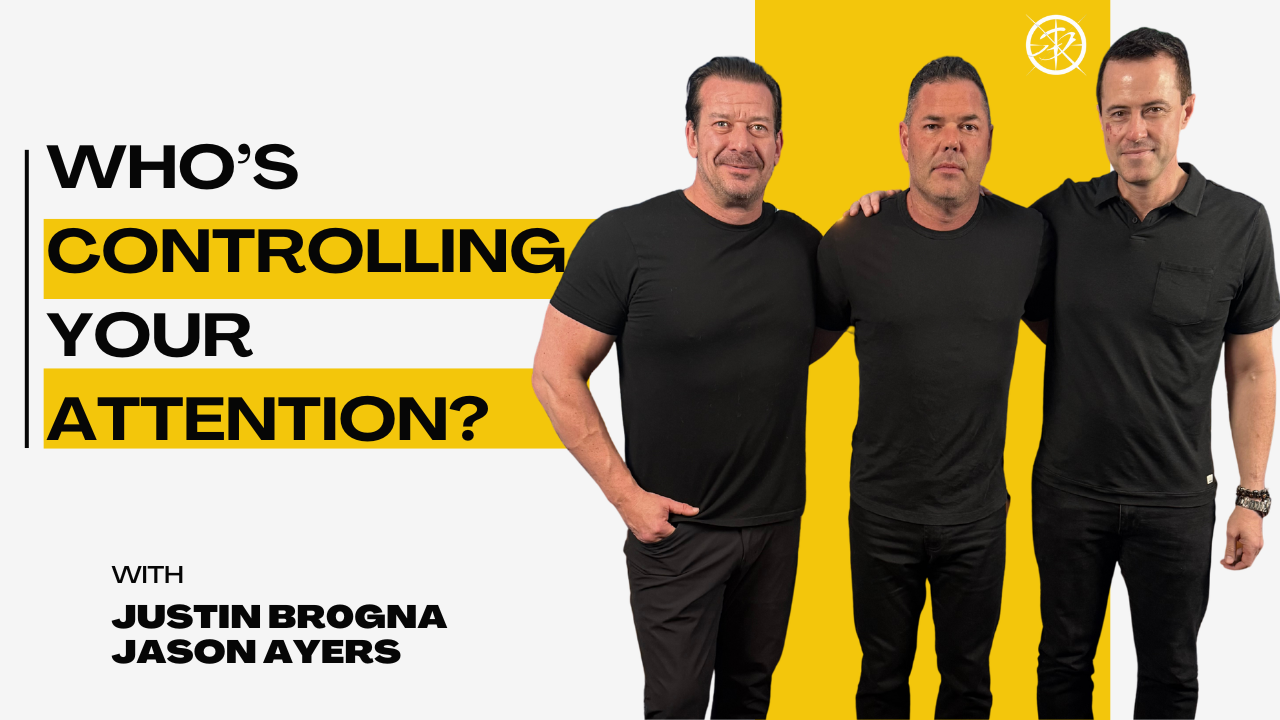
Are You Being Programmed? Media, AI, and Protecting Your Peace in a Noisy World
Are your media habits quietly programming your mind? In this episode recap, three best friends explore how movies, news, social media, and AI shape your nervous system, identity, and relationships—and what it looks like to drop the masks, protect your peace, and move from surviving to truly living.
We live in a world that won’t stop talking. Our phones buzz, our feeds scroll endlessly, and even our gym playlists are shaping how we feel, think, and move through the day—usually without us realizing it. In the latest episode of the podcast, three Gen X dads sit down to ask a simple but uncomfortable question: Who’s actually doing the programming here—us, or our media?
How media quietly scripts our identity
For many of us, movies and TV weren’t just entertainment; they were training manuals for who we thought we were supposed to be. From Braveheart and Gladiator double features to Baywatch and comfort sitcoms, screen stories became the lens through which we understood manhood, courage, relationships, and even how we were “supposed” to react to danger.
In this conversation, we explore how “television programming” really did program us—especially as Gen X kids raised on big‑box‑office action and cable reruns. We unpack everything from childhood suicide notes and Faces of Death to the way a single VHS tape or movie night could leave emotional fingerprints that last for decades.
The media diet: what you consume consumes you
Today, the idea of a “media diet” isn’t a metaphor; it’s survival. What we watch, listen to, and scroll doesn’t just inform us—it shapes our nervous system, our sense of safety, and our baseline mood. Hardcore rap at the gym might give you a boost, but it can also slip into a mantra that keeps your system locked in fight‑mode long after you rack the weights.
We talk about using music strategically—different playlists for writing, training, and decompressing—and why some content simply isn’t worth the nervous‑system cost. There’s a big difference between being entertained and being agitated, and that line is easier to cross than most of us realize.
Parenting in the age of TikTok and “infinite scroll”
If you’re raising kids right now, you’re not just managing screen time; you’re managing identity formation in real time. In the episode, we dive into how daughters and sons are navigating Instagram, TikTok, and Snapchat—and how much of that is about connection versus comparison.
We talk about:
Why some kids self‑regulate social media surprisingly well while others get swallowed whole
How to prioritize honest one‑on‑one conversations over rigid “rules” that don’t fit every child
Why many of the people who built these platforms won’t let their own kids use them—and what that tells us
The goal isn’t to create fear; it’s to create awareness—and to give parents a more grounded way to talk about what’s real and what’s engineered.
When language becomes a weapon
The episode also tackles the weaponization of language and how subtle shifts in vocabulary can polarize a society. Whether it’s how we describe protests, immigration, or violence, the words we choose aren’t neutral—they carry emotional weight and political leverage.
We explore:
How redefining “violence” to include words sets the stage for justifying actual physical violence
Why clips of protests and police interactions rarely show the whole story
How media incentives reward outrage, fragmentation, and “us vs. them” narratives
When you zoom out and follow the incentives—who benefits, who profits—it becomes much easier to see why everything feels so inflamed all the time.
News, noise, and how much you really need to know
Traditional news is collapsing, trust in media is plummeting, and at the same time we have more access to information than any generation before us. We talk about the decline of legacy outlets, layoffs at major newspapers, and why many of us feel like we’re drinking from a fire hose of crisis.
The question we wrestle with is not “Should you be informed?” but rather “How much information can you take in before it starts to damage your ability to live well?” Sometimes, the bravest thing you can do is limit your intake and refuse to let every global emergency colonize your nervous system.
AI, robotics, and drinking from the fire hose of change
No modern conversation about media and mental health is complete without talking about AI. From fears of Skynet and killer robots to the quiet reality of synthetic videos that can spark very real human reactions, AI is accelerating faster than our nervous systems can comfortably adapt.
In the episode, we explore:
Why AI isn’t just a tech story—it’s an emotional and existential one
How synthetic media can manipulate perception and behavior at scale
What it means to adapt without surrendering your agency or humanity
The goal isn’t to offer doom or denial, but to find a sane middle path where we use the tools without becoming tools ourselves.
Dropping the masks and protecting your peace
Underneath all the talk about movies, music, protests, news, and AI is a deeper invitation: to drop the masks and stop living as a never‑ending “self‑improvement project.” Sometimes the most radical act is to accept who you are, stop trying to constantly remodel your personality, and actually be present in your own life.
We talk about:
The difference between speaking from a wound versus a scar
How to move from survival mode into authentic living
Why “protect your peace, protect your people, protect your principles” is more than a slogan—it’s a way of navigating a noisy world
It’s about reclaiming your attention, your agency, and your ability to be where your feet are—especially with the people who matter most.
From surviving to thriving in a changing world
The episode closes with a look at personal growth and future aspirations in a world that’s changing faster than any of us can fully process. We explore what it means to become an “elder statesman” in your own life—to move from proving yourself to providing perspective, support, and stability to others.
You don’t need to fix the entire world. You just need to tend to the part of the garden you can touch. That might mean becoming more intentional about your media diet, setting better boundaries around your attention, or finally dropping a persona that no longer fits.
If this resonates, the full episode goes much deeper into these themes—with stories, mistakes, and hard‑won lessons you can actually use. As you read or listen, consider one simple question: What’s one small shift in your media diet that would make your life feel lighter this week?
Be Rude. Stay Alive.
“Being nice” shouldn’t cost you your safety. This post breaks down why politeness can be dangerous, how to trust your intuition, and how non‑negotiable boundaries become your first line of defense.
Being polite is a courtesy. Protecting yourself is a priority.
From the time many women are little girls, they’re taught to smile, to be agreeable, to avoid “making a scene.” Say yes. Be helpful. Don’t be rude. Even when every internal alarm bell is ringing, that social conditioning can override instinct and create a dangerous hesitation right when fast action is required.
This isn’t about becoming hostile or cold. It’s about recognizing that your safety will never be worth less than someone else’s opinion of your manners.
In this post, I want to share three critical safety lessons: why being nice can become dangerous, how trusting your gut is backed by science—not superstition—and how setting non‑negotiable boundaries becomes your first line of defense.
When Being Nice Becomes Dangerous
Think about these moments:
A stranger asks you to help load something into their car.
Someone you don’t know calls your name in a dark parking lot.
You feel like you’re being followed, but you don’t want to “overreact.”
Your instinct whispers, “Get out of here.”
Your conditioning replies, “Don’t be mean.”
That gap between instinct and action is where danger lives.
People who intend harm are not looking for the strongest target; they’re looking for the easiest one. They look for compliance, not confrontation. If you’ve been trained your whole life to avoid conflict at all costs, you can appear—without even realizing it—like a more promising target.
Giving yourself permission to be “rude” when your safety is at stake is a radical act of self‑protection. You do not owe anyone:
Your time
Your help
Your attention
Your body
Especially not when something feels off.
“Be rude. Stay alive.” is not about being unkind. It’s about recognizing a simple truth: strangers are not entitled to your comfort, but you are entitled to get home safe.
The Science of Trusting Your Gut
Women’s intuition is often treated like a joke or a cliché. It isn’t. It’s neuroscience.
Your brain is constantly scanning your environment, taking in far more information than your conscious mind can process in real time. Microexpressions, subtle tone changes, shifts in body language, environmental anomalies—your nervous system notices these signals before you can put words to them.
That “weird feeling” in your stomach?
The hair standing up on your neck?
The sudden urge to create distance?
That’s your brain alerting you to a pattern that doesn’t match what “safe” usually looks like.
Here’s what makes many women more vulnerable: they’re repeatedly told they’re “too sensitive,” “too dramatic,” or “paranoid” for listening to those signals. Over time, they learn to doubt themselves. They feel pressure to stay, to stay quiet, to stay polite—until it’s too late.
You do not need a court‑approved level of evidence to walk away.
If something feels wrong, treat that feeling as valid data. If you’re wrong and it was nothing, you lost a few minutes of your day. If you’re right, you may have just saved your life. There is no downside to leaving a situation that doesn’t feel safe.
You don’t need permission to trust yourself.
You don’t need proof to leave.
Your discomfort is enough.
Boundaries: Your First Line of Defense
Boundaries are not just “relationship skills.” They are a safety strategy.
A boundary is a clear line that protects your physical, emotional, and relational space. It defines what you will and will not allow. Healthy boundaries:
Keep others from breaking in
Keep you from bleeding out
Predators understand this even if you don’t. They will test your limits long before they ever cross them. A “harmless” touch on the lower back, a crude joke, a persistent push after you say you’re not interested—these are not accidents. They are probes.
If you’re used to minimizing your own needs, you may excuse this behavior, laugh it off, or try not to “make it awkward.” That’s exactly what they’re hoping for.
Your safety depends on having non‑negotiables—lines that are not up for debate:
Physical violence
Emotional abuse
Coercion or forced intimacy
Not today. Not tomorrow. Not ever.
You have the right to say:
“I’m not comfortable with that.”
“I’m not doing that.”
“No.”
And stop there.
“No” is the end of the conversation, not the beginning of a negotiation. Anything you say after “no” is often you giving away your power in an attempt to manage someone else’s reaction.
Practicing Boundaries Before You Need Them
For many people, these statements feel anything but natural. That’s okay. Confidence is not a prerequisite for safety; practice is.
You can normalize these responses by rehearsing them out loud, the same way you’d practice any other skill:
Say “No, I’m not doing that” while looking at yourself in the mirror.
Role‑play scenarios with a trusted friend where you decline, disengage, or walk away.
Rehearse how you’ll exit a situation—what you’ll say, where you’ll go, who you’ll call.
The goal is to make your protective responses automatic, so when stress hits, you’re not searching for words. You already know what to say and do.
Healthy boundaries aren’t selfish. They’re the framework that protects your consent and communicates your self‑respect. Sometimes, to be truly selfless—to show up for the people who rely on you—you must first be willing to be “selfish” with your safety.
You cannot pour from an empty cup. You cannot protect others if you’re not here.
Safety Over Social Approval
At the end of the day, it comes down to this:
Your life matters more than someone else’s comfort.
Your safety matters more than looking “nice.”
Your instincts matter more than social expectations.
Be rude when you need to.
Trust your gut even when you can’t explain it.
Set boundaries that leave no room for negotiation.
Your safety is not negotiable.
If this message resonates with you, share it with someone who needs the reminder that they’re allowed to protect their peace, their body, and their autonomy—without apology.
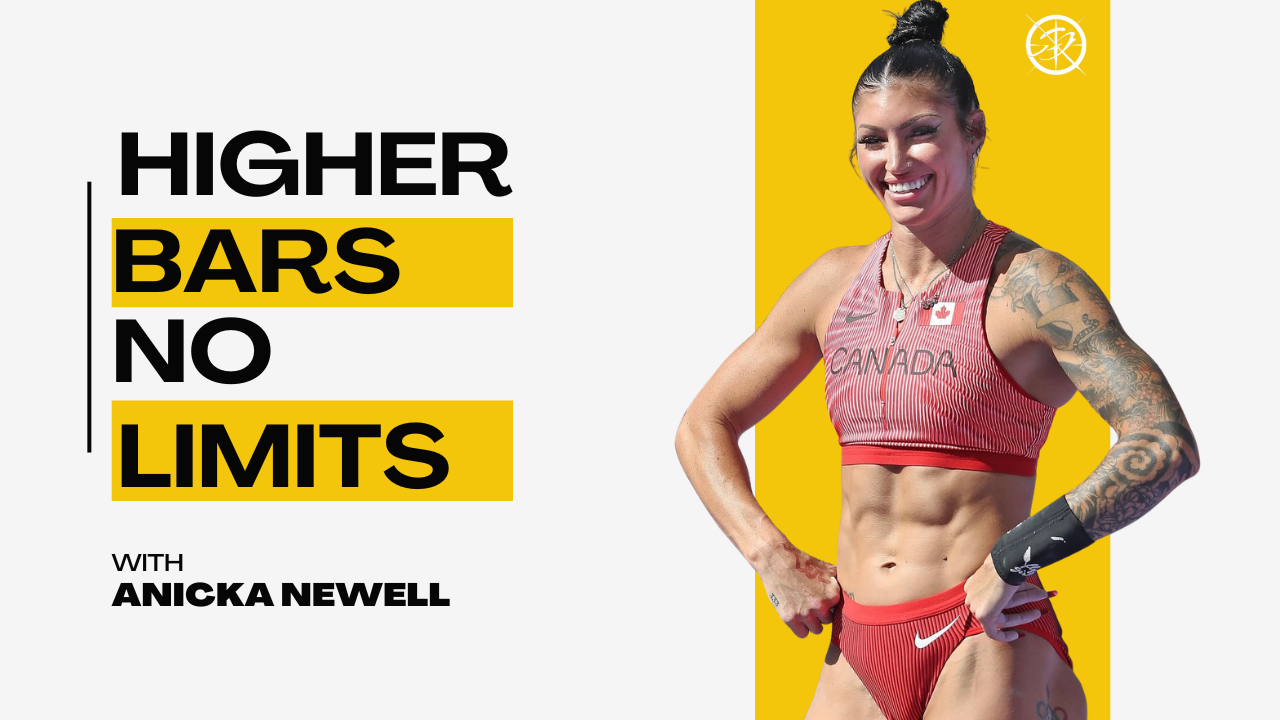
“Average Olympian” to Fly Girl: Inside a World‑Class Pole Vaulter’s Mindset
Three‑time Olympian Anika Newell breaks down what it really means to chase “higher bars” in sport and life, from loving the grind and rehabbing a brutal ankle injury in 15 days to facing federation rejection, modern dating, and life after elite competition.
Why do some athletes keep chasing higher bars long after the world thinks they have peaked? For three‑time Olympic pole vaulter Anika Newell, the answer starts with a love of the grind, an “audience of one” mindset, and an unshakable belief that there is always another level to reach.
In this episode of Corson’s Corner, Anika sits down with host Spencer Coursen to talk about the pain, pressure, and purpose behind a 20‑year commitment to pole vaulting, and what comes next when the runway lights finally go dark.
“There’s Always a Higher Bar”
For Anika, pole vaulting is more than a job, but it’s not her identity. She describes the event as “literally flying,” and what keeps her hooked is the fact that there’s always a higher bar waiting—15 feet becomes 15.1, 15.2, 15.3, and so on, with no real ceiling on what might be possible.
Training days often mean brutal solo workouts on an empty track with nothing but a stopwatch and her own internal standards. She loves pushing her threshold to find out whether she is truly at her limit or just bumping into the comfort‑seeking part of her brain. That willingness to “enjoy the suck” has become her competitive advantage.
Rebuilding Technique After a Decade Pro
Despite being a ten‑year veteran in the sport, Anika essentially tore down and rebuilt her technique with a new coach. She moved from a stiff, muscle‑through‑it “bodybuilder” style to a fluid, dance‑like approach where she and the pole move as one.
Her coach rarely hands out compliments, which Anika prefers; she wants direct feedback, not sugar‑coating. The payoff is obvious: she’s hitting personal records in the weight room and on the track, and she finally feels like she truly understands how to pole vault at a world‑class level.
From “Average Olympian” to Audience of One
In 2024, Athletics Canada dropped Anika from funding and told her they didn’t see any future potential, effectively labeling her an “average Olympian.” That phrase rattled her, especially after three Olympics and multiple World Championship finals—an “average Olympian” is statistically rarer than most people’s dream partner wish lists.
After a long emotional slump and a reset at home with family, she reframed the insult into fuel. She realized she didn’t need a federation to validate her career; she needed to impress herself. In the following indoor season, she ranked top‑10 in the world, proof that her potential was never up for external debate.
Acknowledge, Identify, Decide, Act: Her Resilience Framework
When it comes to stress, fear, and adversity, Anika uses a simple four‑step framework: Acknowledge, Identify, Decide, Act. She first acknowledges the problem and widens her perspective, then identifies the root cause and her options forward. From there, she decides on a path and acts, instead of spiraling in emotion or indecision.
Spencer connects this to the military’s OODA loop (Observe, Orient, Decide, Act), and Anika explains that she built her own version during the mental battles leading up to the Tokyo Olympics, where fear was often her biggest opponent. The system is logical, portable, and works whether she’s dealing with competition anxiety, life stress, or injury.
Turning a 6–8 Week Injury into a 15‑Day Comeback
Five weeks before the conversation, Anika rolled her ankle in a pothole while running strides on a grass field. The result: partially torn ligaments, a sprain, and a bone contusion—a classic “6 to 8 weeks” diagnosis.
Instead of panicking, she went straight into “assessment mode,” breathing, checking swelling and pain levels, and mapping out next steps. She decided on day one she would be back in two weeks. Then she attacked recovery from every angle: twice‑daily brutal PT, daily meditation, grounding walks by the water, breath work, reading mindset literature, consulting a nutritionist, cleaning up inflammatory foods, and leveraging sauna and other tools to push blood flow and healing.
The result: she was running in seven days and back vaulting on day 15, exactly as she had declared. For Anika, it was a powerful demonstration of mind–body connection and what happens when attitude and systems align.
Document, Don’t Perform: Authenticity on Social Media
Unlike many athletes trying to “be influencers,” Anika’s content strategy is simple: she documents her real life instead of creating performances for the algorithm. She films workouts primarily to study technique and then repurposes footage if it might be helpful or interesting to others.
That authenticity cuts both ways. A reel of her squatting with chains in a public gym went viral and drew criticism from people who didn’t understand that this is normal elite training. She shrugs off the hate, noting that people “only hate up,” and that some percentage of detractors is the cost of doing real work in public.
Batteries, Vacuums, and Protecting Her Peace
Anika is fiercely protective of her peace and keeps a small, intentional circle. She resonates with the idea that people are either “batteries” who recharge you or “vacuums” who drain you, and she has no problem cutting off relationships that consistently pull her energy down.
She grew up with steady, resilient parents who modeled calm problem‑solving instead of emotional meltdowns, giving her an early blueprint for distress tolerance. Today, that shows up in how she handles adversity, chooses friends, and manages her mental health during long stretches of isolated training.
Modern Dating, Masculinity, and Wanting to Be in Her Feminine
The conversation turns candid when Spencer asks about dating as a high‑performing woman in today’s world. Anika says bluntly that she has yet to see a man “outman” her—she often finds herself leading conversations, making plans, and driving the connection.
She would much rather relax into her feminine, but that requires a masculine presence she can trust to lead with clarity, consistency, and emotional safety. Dating apps feel more like endless window‑shopping than intentional partnership building, and she is uninterested in playing small‑talk games or pretending not to care. What she wants is simple: a consistent, caring partner whose ambition, values, and capacity to love match her own.
Sacrifice, FOMO, and Life After Elite Sport
Chasing Olympic‑level goals has meant sacrificing almost everything else for eight‑month stretches of each year: birthdays, weddings, girls’ trips, spontaneous dinners, and normal social rhythms. She lives “under a rock” during the season, but insists it has been 1000% worth it to pursue her dreams while she’s young.
Even so, she is honest about the loneliness and FOMO that come with that path and the looming question of retirement. Anika views 2025 as her “full send” season, intending to leave everything on the track and then step back to explore life beyond the runway. She imagines a six‑month pause after the season to see what opportunities and goals emerge, and only then deciding whether to chase a home‑soil Olympics in LA 2028.
Following Bliss: Attitude, Resilience, and Joy as a Compass
Asked what advice she would give someone who wants to emulate her approach to life, Anika narrows it down to three pillars: attitude, resilience, and following bliss. Attitude means owning your reactions instead of throwing tantrums and staying coachable in the face of hard feedback. Resilience means getting back up after each knockdown and finding a new door when the first one stays locked.
Following bliss is her way of choosing paths that genuinely light her up, trusting that joy leads to both purpose and, eventually, profit. For Anika, pole vaulting is what she does, not who she is—but the way she does it reveals a blueprint anyone can use to chase higher bars in their own life.

Timberwalk Explained: The 5 Factors That Decide If You’re Liable
Most violent crimes aren’t random. In this breakdown of the Timberwalk factors, discover how patterns of behavior establish foreseeability—and why ignoring warning signs can lead to massive liability.
From a threat assessment and security perspective, understanding how risk develops is everything. In negligent security cases, one legal framework continues to define whether a crime was predictable or not—and ultimately, whether a property owner is held liable.
That framework comes from a landmark Texas Supreme Court case: Timberwalk v. Kane.
What Determines Liability After a Violent Crime?
Why do some apartment shootings lead to million-dollar lawsuits while others don’t?
The answer isn’t just that a crime occurred. It’s whether that crime was legally foreseeable.
Foreseeability is the standard courts use to determine if a property owner should have anticipated the risk and taken action. If the answer is yes, liability follows.
The Timberwalk Framework
In 1998, the Texas Supreme Court established five key factors that define foreseeability in negligent security cases:
Proximity
Recency
Frequency
Similarity
Publicity
Individually, these factors provide insight. Together, they create a powerful framework for identifying patterns of risk.
And those patterns matter more than most people realize.
Violent Crime Follows Patterns
One of the biggest misconceptions about violent crime is that it’s random.
It’s not.
Violent crime tends to emerge where opportunity and vulnerability intersect. When you analyze incidents over time, patterns begin to form—patterns that signal increasing risk.
The Timberwalk factors help make those patterns visible.
Breaking Down the Five Factors
Proximity
Proximity asks a simple question: where did prior crimes occur?
Incidents that happen on the property itself—inside units, in parking lots, or common areas—carry significant weight. Once violent crime enters the environment, the likelihood of future incidents increases dramatically.
Recency
Recency focuses on timing.
A crime that occurred years ago may not carry much weight. But incidents that occurred weeks, days, or even hours earlier point to an active and ongoing risk.
Recent activity signals that the threat is current—not historical.
Frequency
Frequency reveals patterns.
A single incident might be dismissed. Multiple incidents are harder to ignore. Repeated acts of violence suggest the property is becoming criminogenic—a place where crime is more likely to occur.
Similarity
Similarity examines the type of crime.
If prior incidents closely resemble the current event—such as repeated gun-related violence—they become highly relevant. They demonstrate that the specific danger was already present.
Publicity
Publicity addresses awareness.
Did the property owner know, or should they have known?
Evidence like police reports, tenant complaints, incident logs, and internal communications can establish “notice.” And once notice is established, responsibility becomes much harder to deny.
When Warning Signs Become Liability
Consider a scenario where residents report hearing gunshots outside their apartment. Police respond. The incident is documented. No one is injured.
On its own, it might seem insignificant.
But through the lens of Timberwalk, that same event becomes critical. It establishes proximity, recency, similarity, and publicity—all at once.
It becomes a warning sign.
And when warning signs are ignored, they don’t disappear. They compound.
The Real Risk Isn’t the Incident
The real risk isn’t just the violent act itself.
It’s the pattern leading up to it.
When those patterns are visible—and documented—property owners are expected to respond. Failing to do so can transform a preventable situation into a legal and financial disaster.
Why This Matters
For security professionals, property managers, and anyone responsible for safety, the takeaway is clear:
Risk rarely appears without warning.
The question isn’t whether the signs exist. It’s whether they’re recognized—and acted on—before it’s too late.
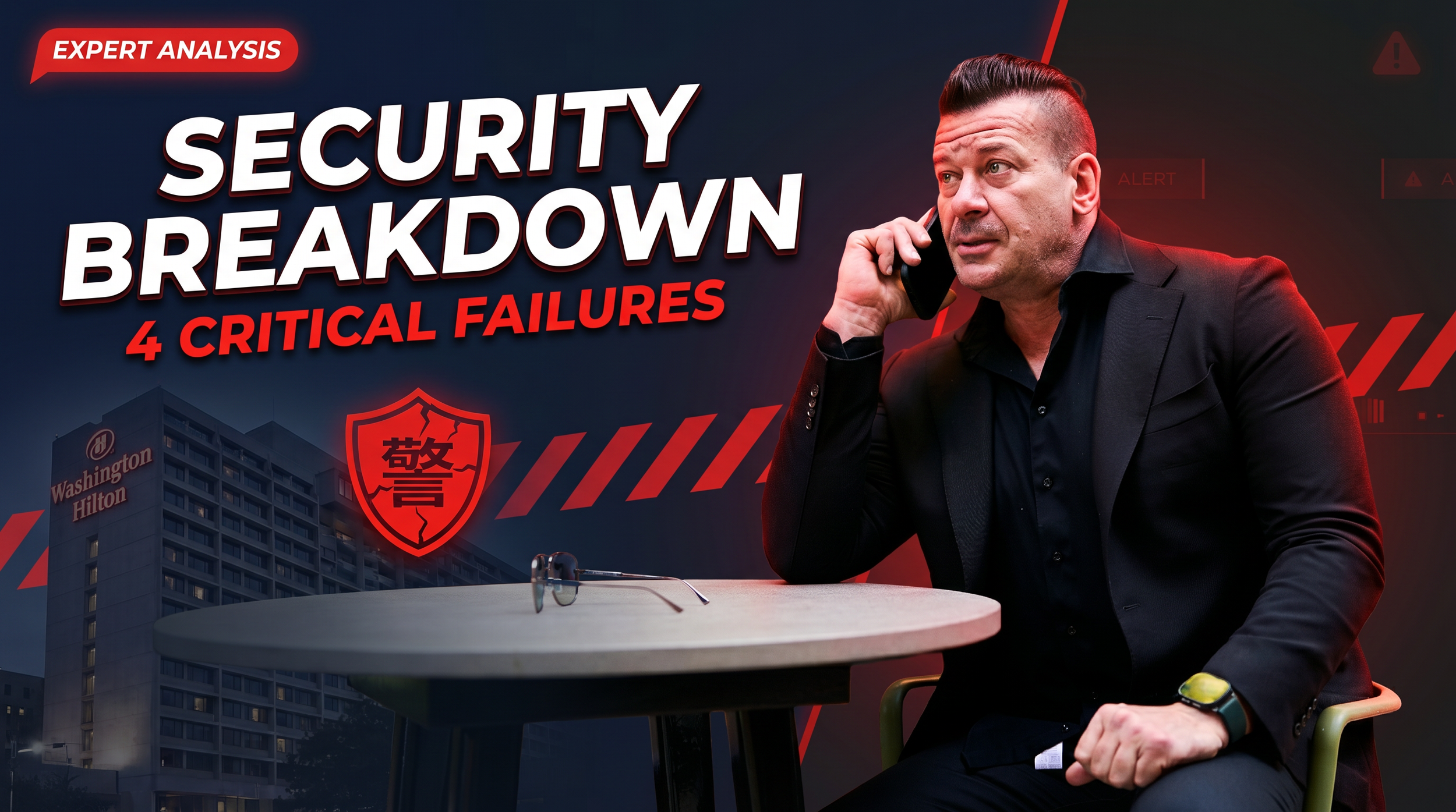
Presidential Security Breakdown: Expert Analysis of the Latest Assassination Attempt
Expert analysis reveals four critical failures in Secret Service protection during the latest attack on President Trump
Another attempt on the president's life has raised serious questions about the effectiveness of current protective protocols. While President Trump praised the Secret Service for stopping the attack, the fact that an armed individual reached the ballroom entrance of the Washington Hilton the infamous site of the 1981 Reagan assassination attempt reveals troubling vulnerabilities in our highest levels of security.
In this episode, I sit down with threat management expert and author of The Safety Trap, Spencer Coursen, to conduct a comprehensive after-action analysis of what went wrong and how future attacks can be prevented.
The Four Critical Failures
Coursen identifies four fundamental breakdowns that allowed this attack to progress as far as it did:
1. Leakage: Missed Warning Signs
Leakage refers to any communication of intent, ideation, or grievance that precedes an act of violence. It's one of the most predictive pre-incident indicators available to protective intelligence teams. In this case, the attacker authored a manifesto, and his family made calls to police before the attack, yet these critical signals were either missed, dismissed, or were never connected into actionable intelligence.
"What was missed? What was dismissed? What connections were not connected?" Coursen asks. The failure to aggregate and analyze these warning signs represents a fundamental breakdown in protective intelligence.
2. Target Selection: Perceived Vulnerability
The single most influential factor in target selection is likelihood of success. The attacker's manifesto explicitly referenced the lack of security and clear attack pathways that made this event attractive. He conducted extensive research, including virtual 360-degree tours of the hotel available online, allowing him to map out elevator lobbies, stairwells, and routes to the ballroom with precision.
"Anything that we can do to mitigate that likelihood of success will ensure the future certainty of safety," Coursen emphasizes.
3. Defense in Depth: The Protective Envelope Collapsed
When you have the President, Vice President, Joint Chiefs, members of Congress, and the line of succession in one location, you need concentric rings of security protecting the entire venue not just the event space. The Washington Hilton presents unique challenges: it hosts both event attendees and regular hotel guests, yet the entire facility was not secured.
The attacker was able to check into the hotel the night before with multiple weapons, including a pistol, shotgun loaded with buckshot, and knives. He circumvented TSA screening by taking trains from his origin to Chicago and then to Washington, D.C. Video footage shows him lingering in the lobby, waiting for security personnel to relax their vigilance after the event began, then rushing through an understaffed magnetometer checkpoint.
"You want to have protective entities outside there so that you can identify behavioral anomalies or self-identifying behaviors of someone who may be on the pathway to violence," Coursen explains.
4. Response Over Prevention: The Secret Service Paradox
The Secret Service excels at threat response getting the principal "off the X" under duress. We saw this capability in Butler, Pennsylvania, and again at this event. However, the agency continues to fall into the trap of relying on reactive measures rather than preventative protocols.
Coursen points to several response failures in this incident:
A full 10-second delay before any protective package surrounded the President after shots were fired
Another 10 seconds elapsed before the President began to be moved inefficiently at that
The President himself influenced the timing of his evacuation, saying he "wanted to see what was going on"
Physical mismatches between protectors and the protectee, with agents unable to effectively lift and move the President
Vice President Vance was evacuated before President Trump
"The person who is under duress should never be a decision maker," Coursen states. "You cannot have your protectors be smaller than their protectee."
The Five D's of Protection
Effective protective protocols require what Coursen calls "the Five D's": Deter, Detect, Deny, Delay, and Defend. Current Secret Service operations focus heavily on the last two delay and defend which are reactive rather than preventative.
"When you take the first three out and you're left with just delaying and defending, you want to really reimagine your protective protocol so that it is one of a preventative action rather than a reactive one," Coursen explains.
The first three D's deter, detect, and deny are where security programs succeed or fail. If someone can circumvent deterrence and detection, the remaining defensive measures become desperate last stands rather than layers of a comprehensive security architecture.
The Red Team Scenario
Perhaps most chilling is Coursen's assessment of what could have happened if this were a coordinated professional attack rather than a lone actor. The video footage reveals a critical vulnerability: when the attacker rushed the magnetometer, every agent abandoned their post to pursue him, leaving the checkpoint completely unguarded.
"This is what we would call in the military “ambush relief syndrome," Coursen explains. "You send basically a probe in, someone you expect to be detained to capture the attention of everyone who is supposed to be securing that event, and then the follow-on forces come through."
If a hostile nation had deployed a professional team what security professionals call a "red team" the outcome could have been catastrophic. The term "red team" originated with Richard Marcinko's SEAL Team 6 operations testing nuclear silo security by simulating Russian attacks.
The Historic Hinckley Hilton
The Washington Hilton carries a dark legacy as the site of the 1981 assassination attempt on President Ronald Reagan by John Hinckley Jr. The venue is known among security professionals as the "Hinckley Hilton" and has specific protective infrastructure built into it, including a secure arrival area for the President and a hardened room behind event stages.
Yet this historic significance and existing infrastructure were insufficient to prevent another attacker from reaching the same venue with weapons and intent to kill. The institutional memory of that attack should have elevated security protocols, not created complacency.
Recommendations for Future Protection
Coursen offers clear guidance for improving presidential protection:
Comprehensive venue security: Secure the entire facility, not just event spaces, with behavioral monitoring throughout
Enhanced protective intelligence: Cross-reference hotel guests against event attendees using available data analytics
Physical matching: Ensure protective agents physically exceed the protectee's size and strength
Eliminate principal decision-making: The person under threat never decides evacuation timing
Post-event vigilance: Maintain maximum alertness after events conclude, when relaxation creates vulnerability
Integrated threat assessment: Connect online communications, family warnings, and behavioral indicators into actionable intelligence
Focus on the first three D's: Prioritize deterrence, detection, and denial over reactive defense
The Bottom Line
"Every protective organization who is responsible for ensuring the certainty of their protectee's safety really needs to take a hard look at just how effective your deterrence and your detection factors are," Coursen warns. "Because if someone is able to circumvent those two D's, the next three D's are deny, delay, and defend. And that's when you pivot from a preventative model to a reactive model."
His final assessment is stark: "In any protective entity, if you are relying on how good your reaction is, you've already lost."
This attempted assassination the latest in a series of threats against President Trump demonstrates that reactive excellence is insufficient. The Secret Service must reimagine its protective protocols to emphasize prevention over response, intelligence over firepower, and comprehensive security architecture over last-ditch heroics.
The American people deserve to know that the President, Vice President, and line of succession are protected by systems designed to prevent attacks, not merely respond to them. Until that fundamental shift occurs, we remain vulnerable to not just lone actors, but coordinated professional teams that could exploit the same weaknesses revealed in this attack.
Watch the full episode for detailed analysis of the security footage, discussion of the attacker's manifesto, and Spencer Coursen's complete breakdown of protective protocol failures. Subscribe to stay updated on critical security and threat management insights.
Hidden Pain: How to Recognize When Someone You Love Is in Crisis
Most people don’t scream for help before they break—they whisper it through their behavior. In this episode, we unpack the quiet signs of hidden despair and how simple, genuine kindness can keep someone alive long enough to find real help.
Some of the people who look the strongest on the outside are fighting the darkest battles when no one is watching. This episode pulls back the curtain on what that struggle actually looks like in everyday life—and how you can respond before it is too late.
When “Just Having a Drink” Becomes Self‑Medication
On the surface, a few extra drinks can look like normal stress relief. Underneath, it can be a deliberate attempt to outrun nightmares, trauma, and a mind that refuses to quiet down.
In the episode, I talk about using alcohol not as a social habit, but as a way to avoid REM sleep and recurring, brutal nightmares. It looked functional from the outside: I still showed up for work, worked out, and took care of responsibilities. But the truth was simple—this was medication, not recreation. Over time, tolerance grew, intake climbed, and the “veteran and bourbon” stereotype became an easy mask to hide behind.
The lesson for you: when someone’s drinking escalates over time, especially if they still seem “on top of things,” treat it as a possible signal of pain, not just a phase.
Dark Jokes, Violent Thoughts, and Suicidal Ideation in Disguise
Not everyone in crisis sits down and says, “I’m thinking about ending my life.” More often, it slips out sideways in casual comments and dark humor.
Phrases like “Just shoot me” or “If you see me do that, use my own gun” can sound like throwaway lines. In reality, they may come from a mind that has spent a lot of time rehearsing dark, violent scenarios. When those thoughts become familiar, they start to feel safe enough to say out loud—especially when the person doesn’t realize they are asking for help.
You do not need to psychoanalyze every joke. But when you hear a pattern of dark, self‑directed humor, especially from someone whose mood seems to be slipping, take it seriously instead of laughing it off and moving on.
The Disappearing Act: Isolation Behind Excuses
One of the clearest signs of hidden despair is withdrawal that hides behind believable reasons. Work, travel, family obligations, “client emergencies”—they all make great cover stories for someone who no longer feels worthy of your time.
In my own life, I canceled plans at the last minute, claimed I had to rush off to handle something important, and then went home to sit alone. If you drove by, the car was in the driveway and the TV was on. I wasn’t busy. I was disappearing.
If someone you care about starts canceling frequently, fading from group chats, or becoming strangely hard to pin down, it is worth a gentle check‑in. You are not investigating them; you are verifying that they are still connected to the world.
When Identity and Self‑Worth Turn Against You
Many high performers and service‑oriented people build their entire identity around being useful to others. That sounds noble, but it becomes dangerous when their self‑worth depends solely on being the problem‑solver, protector, or caretaker.
In the episode, I share how my value was tied directly to how much I was doing for other people. When that demand slowed down, my internal story became, “If I am not needed, I am nothing.” That narrative fuels self‑sabotage, isolation, and destructive habits. On the outside, it looks like competence and control. On the inside, it is a collapse in slow motion.
If you know someone whose whole life revolves around serving, fixing, or leading others, pay attention when they suddenly pull away. That may be when they need support the most.
Projecting Strength While Silently Falling Apart
One of the hardest truths to accept is that people who are excellent at helping others are often terrible at helping themselves. I could coach someone through a crisis, build them a plan, and walk them out the other side. But when it came to my own pain, all I could do was endure it and hide.
From the outside, I projected competence: strong, composed, capable. On the inside, I was in a “devastating, deep crescendo.” I knew there was a problem but could not name it, and I did everything but stand on a rooftop and scream for help.
This gap between appearance and reality is where many leaders, veterans, parents, and entrepreneurs live. Your takeaway: never assume that competence equals emotional safety. Check in on the people you lean on.
What to Do When You Notice the Signs
You do not need a counseling degree to matter. In fact, trying to dig too deep, too fast can cause someone in crisis to shut down or push you away. Instead, focus on simple, non‑intrusive connection.
That might look like:
A casual “Hey, you’ve been on my mind—want to grab coffee?”
Dropping by with a game, a walk, or a light hangout.
A text that says, “I appreciate you. You matter to me.”
The goal is not to diagnose them. The goal is to remind them that they exist in someone else’s world, and that their presence has value.
The Life‑Changing Power of Small Kindness
In the episode, I share a moment walking down South Lamar after a brutally hard day. Dave Chappelle walked past, looked at me, and said, “Thank you for your service.” He kept going. I replied, “No—thank you for yours.”
That tiny interaction changed my entire day. It did not fix my life. It did not cure my trauma. But it gave me enough of a lift to keep going. Sometimes that is all someone needs: one more reason to stay, one more reminder that they are seen.
Never underestimate how far a single, sincere act of kindness can reach. You may never know the full impact. But for someone standing at the edge, it might be the difference between acting on a dark thought and choosing to stay for one more day.
How You Can Start Today
As you watch or listen to this episode, think about the people in your life who:
Drink more than they used to, but still “function”
Joke about death, violence, or self‑harm
Cancel plans and drift away from community
Are always helping others, but rarely accept help themselves
Pick one person and reach out today with something simple and genuine. No big speech. No interrogation. Just presence.
You do not have to fix them. You just have to show up.
From Rock Bottom to the Ring: How Boxing Helped Haley Beat Depression
Boxing saved her life—then became her business. In this episode, boxing coach and creator Haley Wheeler reveals how she went from a tiny town in Turkey, Texas and severe eating disorders to building confidence, moving to Austin, and launching her Body by Haley programs and app.
When you first meet Haley Wheeler, you see the confident boxing coach with 100K+ followers, packed classes, and a new fitness app on the way. What you don’t see right away is the small‑town girl from Turkey, Texas, who lost her period for three years to anorexia, later gained 60 pounds through binge eating, and used boxing to claw her way out of depression.
In this episode of Coursen’s Corner, Haley shares how she turned a cardio boxing class into therapy, a career pivot, and a platform to empower women far beyond the gym.
Small‑Town Roots and Small Dreams
Haley grew up in tiny Turkey, Texas—so small that her graduating class had only 15 students and everyone played every sport just to field a team. She was the classic small‑town all‑star: basketball, track, cross‑country, cheerleading, dance, and gymnastics, with weekends spent riding horses and four‑wheelers instead of scrolling social media.
Back then, her dreams were just as small as her town; on sixth‑grade career day, she would have said she wanted to be a teacher, mostly because that’s what she saw around her. It wasn’t until she left for college in Lubbock—armed with an ag economics and business scholarship and a love of math—that she realized how limited her worldview had been.
College, though, came with a culture shock: a “huge city” feel, endless restaurants, and a sudden awareness of how she looked compared to everyone else.
Discovering Boxing as Therapy (Not Just Cardio)
Haley first walked into a boxing class in college for a simple reason: she wanted to burn off the freshman 15. A friend dragged her to a cardio kickboxing session, and even though she had no idea what she was doing, the athlete in her kicked in and she instantly felt something click.
Very quickly, she realized boxing was about much more than punches and sweat:
It gave her a place to release emotions she didn’t know how to express verbally as an introvert.
It rebuilt the confidence she’d had as “the athlete” in high school but felt she had lost in a much bigger environment.
It forced her to be fully present—because when you’re boxing, distraction gets you metaphorically (and sometimes literally) punched in the face.
She went from anonymous college student to early‑morning trainer, helping open a boxing club in Lubbock and running 5 a.m. to noon classes before heading to her own college lectures and bartending late into the night. That grind laid the foundation for what would later become her full‑time career.
The Hidden Fight: Eating Disorders and Depression
Behind the scenes, though, Haley was fighting a very different opponent. College brought not only freedom and fast food but also societal pressure and body comparison she had never experienced in her sheltered hometown.
Her journey with disordered eating came in two extreme chapters:
Anorexia:
She began by “cleaning up” her diet and training harder, then slid into extreme restriction fueled by perfectionism and the desire to be as small as possible. Compliments about her shrinking frame only reinforced the behavior, even as she lost her menstrual cycle for three years and watched her hormones and mood crash.Binge eating:
Exhausted by rigidity, she mentally “gave up” and swung to the other extreme, using food as her drug of choice. Binge eating for her meant eating until it physically hurt, chasing a sugar high despite knowing it was harming her, and gaining roughly 60 pounds in just a few months.
During this period, Haley was working from home as a credit analyst, isolated during COVID and stuck in a cycle of overeating, shame, and depression. She describes feeling embarrassed and “silly” for using food to cope, especially as family and friends told her she “looked so good” while she knew internally how sick she really was.
Choosing a New Identity: From “Sick” to “Boxer”
Change didn’t come from a magic pill; it came from a mindset pivot. Haley reached a point where she realized she was letting an eating disorder define her life and rob her of the big future she still secretly wanted.
The turning point came when she felt just confident enough to walk back into a boxing gym. Returning to boxing:
Reconnected her with an identity that wasn’t centered on weight, but on strength and capability.
Helped her shed weight in a sustainable way while rebuilding mental resilience.
Reinforced the idea that if she could see herself as “a boxer,” then her daily micro‑decisions—food, movement, rest—needed to match that identity.
She combined that with journaling, honest self‑audits of her habits, and embracing balance—what she calls an 80/20 mindset instead of all‑or‑nothing thinking. Instead of obsessing over a “perfect” day, she began judging herself over a week, allowing space for pizza and real life without spiraling.
Leaving Safety Behind: Career Pivots and Moving to Austin
Professionally, Haley bounced from credit analyst to real estate in Lubbock, underwriting and selling properties during the COVID boom. But she was also in an unhealthy relationship that left her isolated and disconnected from who she was.
When she finally left that relationship, she started rebuilding her life—making new friends, working real estate on her own, and admitting to herself that she wanted more than West Texas could offer. Lubbock, once overwhelming, now felt small.
A visit to Austin to see her best friend changed everything. Introduced to a built‑in community and energized by the city’s culture, she realized Austin could be the place where she finally aligned her life with her passions: boxing, women’s empowerment, and creative work in health and wellness.
She moved to Austin in May, initially planning to keep real estate as her primary career while “having fun” and getting her feet under her. By fall, though, she felt the pull to get serious about what she truly wanted—and that meant going all‑in on fitness and content.
Going All In: Content, Community, and a 10X Social Media Jump
When Haley decided to treat social media as a business instead of a casual diary, everything accelerated. She had around 10,000 followers when she arrived in Austin; within about six months, that number had jumped to roughly 100,000.
Her growth wasn’t an accident; it came from intentional strategy:
She clarified her brand pillars: boxing, women’s empowerment, confidence, discipline, and a distinctly feminine aesthetic.
She hired a professional videographer, batch‑shot high‑quality content, and personally edited her videos to maintain a consistent visual style.
She used tools like ChatGPT to build content calendars, develop themes, and stay consistent with posting.
At the same time, her in‑person presence grew. Collective in Austin saw her hit the bag, learned her story, and brought her in to coach “Knockout Glutes,” a class that blends lower‑body strength training with boxing fundamentals and core work.
The result: women who might never step into a traditional fight gym suddenly had a safe, inviting on‑ramp to boxing—often starting with zero experience, painted nails, and a little bit of nerves. They left sweaty, smiling, and surprisingly proud of how hard they could actually hit.
Empowering Women Through Knockout Glutes and Online Programs
Haley’s approach to boxing is deliberately welcoming and technically sound. She starts beginners with foundational punches (the one‑two‑three), basic stance, and safe mechanics, then layers in rotation, footwork, and defense so they use their full body instead of just their shoulders.
Her philosophy: boxing should give you “real confidence, not fake confidence”—the kind that comes from feeling capable, not just looking fit.
To reach women beyond Austin, she has launched online training programs:
Knockout Glutes (4‑week program):
A lower‑body strength, boxing, and core plan available in both at‑home and gym versions, designed so you can do the boxing segments with nothing more than light dumbbells.Bikini Body Blueprint (6‑week challenge):
A time‑bound program that provides structured workouts and group accountability for women wanting to lean out and tighten up in a healthy, balanced way.
These standalone programs are serving as the foundation and “bridge” to something bigger: her own training app.
The Body by Haley App: Scaling Her Mission
Haley’s next major step is the Body by Haley app, a subscription‑based platform designed to bring her method to women everywhere. Inside the app, users will be able to:
Input their goals—whether that’s fat loss, muscle gain, or performance—and receive workouts built from movements Haley actually does herself.
Follow nutrition plans tailored to different dietary preferences, from standard to vegan.
Track calories and macros, including via AI‑powered photo logging of meals, similar to advanced food‑tracking apps.
Join challenges with community chat, or upgrade to higher‑touch tiers that offer more direct one‑on‑one support.
She’s realistic that building an app takes longer and costs more than you think, but the vision is clear: to create a scalable ecosystem where boxing, strength training, mindset, and community all live in one place.
Staying Grounded: Faith, Journaling, and Boundaries
For all the momentum in her professional life, Haley is intentional about how she refills her own cup. She leans on:
Boxing as her primary therapy and emotional release—even as she works to carve out time to train herself, not just her clients.
Long walks outside with her dog, Zara, to reset when decision fatigue and stress pile up.
Morning routines that include reading her Bible and journaling to process emotions, clarify goals, and keep her identity rooted in something deeper than followers or revenue.
She even uses AI as a reflection tool—feeding her journaling themes into ChatGPT to get prompts, affirmations, and reminders tailored to what she’s currently working through.
Most importantly, she protects authenticity as a non‑negotiable. Raised by a father who stressed humility, “no‑quit” energy, and staying grounded, she refuses to become one of those people who projects empowerment online while living out of alignment offline. The version of Haley you see on Instagram is the same one you’ll meet in class.
What She Wants Other Women to Know
Looking back, Haley says the advice she’d give her 18‑year‑old self is simple: stop people‑pleasing and apologizing, and be unapologetically yourself. Your life is too short to live small because someone else expects you to.
Her story is proof that:
You can grow up with “small dreams” and still build a big life once you’re exposed to new possibilities.
You can survive extreme mental health struggles and disordered eating—and rebuild a healthy, powerful relationship with your body and food.
You can pivot careers, move cities, and start over, even when it means leaving something safe to chase something uncertain but aligned.
For Haley, beating depression with boxing gloves wasn’t just about throwing punches; it was about choosing a new identity, stepping outside her comfort zone, and deciding she deserved more than survival.
And now, through her classes, programs, and upcoming app, she’s helping thousands of women do the same.
Why Suppressing Emotions Is Slowly Destroying You
Many men are taught to suppress emotions in the name of strength—but that belief comes at a cost. This episode explores how emotional repression leads to disconnection, burnout, and crisis—and why true strength comes from feeling, healing, and growing.
The Lie We’re Told About Masculinity
From a young age, many of us are taught that being a man means being emotionally unshakable. Crying is कमजोरी. Vulnerability is unacceptable. Strength is silence.
For some, that message is explicit—like being told not to cry unless something catastrophic happens. For others, it’s modeled indirectly through family dynamics, culture, and media. Think about the heroes we grew up watching: stoic, isolated, carrying pain without ever expressing it.
But here’s the problem—no one teaches what to do with emotions. Only that you shouldn’t have them.
How Emotional Suppression Gets Reinforced
When emotional maturity isn’t modeled at home, we look elsewhere. Movies, military culture, and societal expectations often reinforce the same message: suppress, endure, and move on.
Grief becomes something you choke back. Trauma becomes a badge of honor. Even PTSD can be framed as proof you “did your job right.”
Over time, this conditioning builds a version of you that feels strong on the outside—but disconnected on the inside.
The Cost of Becoming a “Shell”
Suppressing emotions doesn’t eliminate them. It buries them.
What starts as protection can slowly turn into disconnection. The creative, compassionate, fully-expressed version of yourself gets replaced by a “warrior” identity designed to survive—but not to feel.
Eventually, that emotional backlog doesn’t just disappear. It accumulates.
And when it finally surfaces, it doesn’t come out gently.
The Breaking Point That Changes Everything
For many men, the turning point comes during a crisis—burnout, breakdown, or even suicidal thoughts.
It’s in those moments that the truth becomes unavoidable: emotions aren’t the enemy. Ignoring them is.
Therapy, reflection, and real-life experiences begin to reveal something unexpected—feeling your emotions doesn’t destroy you. It actually helps you heal.
Why Emotions Only Last (If You Let Them)
One of the biggest misconceptions about emotions is that if you allow them, they’ll consume you forever.
In reality, most emotional waves are brief—more like a 90-second song than a permanent state.
But when you interrupt or suppress them, you reset the process. The emotion never completes its cycle. It keeps coming back, demanding to be felt.
Think of it like stopping a song halfway through—every time you restart it, it begins from the beginning.
Let it play once, and it’s done.
Small Feelings vs. Big Crises
When you ignore small emotional signals, they don’t disappear—they grow.
What could have been processed in a moment becomes something you’re forced to confront later, often in a much bigger and more overwhelming way.
Handling emotions in real time is like routine maintenance. Ignore it long enough, and you’re dealing with a full system failure.
Redefining Strength
There’s a difference between appearing strong and actually having strength.
Stoicism—enduring without expression—can look like strength. But real strength is something deeper:
The willingness to face what hurt you
The ability to feel without shutting down
The capacity to heal and come back stronger
Strength isn’t about avoiding damage. It’s about what you do after you’ve been hurt.
A New Definition of Masculinity
Masculinity isn’t the absence of emotion—it’s the mastery of it.
It’s the ability to feel, process, and release without losing yourself. It’s knowing that vulnerability isn’t weakness—it’s a path to clarity, connection, and growth.
And sometimes, it’s as simple as allowing yourself to feel something in the moment—whether that’s grief, memory, or even a reaction to a scene in a movie.
Because when you give yourself permission to feel now, you prevent the explosion later.
When Performance Becomes Survival: Masculinity, Marriage, and Recovery
What do you do when someone you love is slowly being destroyed by addiction and nothing you say seems to help? In this episode with Andrew Watkins, we talk about real boundaries, codependency, and what it actually means to love someone in addiction without losing yourself.
What happens when “doing well” stops being about ambition and starts being about survival?
When every achievement is really a way to outrun shame, rejection, or the fear that you are not enough?
In this episode of When Performance Becomes Survival: Masculinity, Marriage, and Recovery, Spencer Coursen sits down with Andrew Watkins for a brutally honest conversation about addiction, identity, and what it takes to rebuild your life from the inside out.
You Cannot Save Them, and That Is Not Your Job
One of the hardest truths to accept is simple: you cannot save someone from their addiction.
You can support them, you can be honest with them, and you can choose how close you are willing to stand to the chaos, but you cannot do the work for them and you cannot want their healing more than they do.
Trying to save them often turns into a full‑time obsession. You start managing their moods, their damage, their hangovers, and their consequences. Before you realize it, your entire life is built around their problem, not your own purpose. That is not love. That is losing yourself.
Boundaries vs. Preferences: The Line That Changes Everything
A key idea from Spencer and Andrew’s conversation is this: a boundary without a consequence is just a preference.
If nothing changes when your line is crossed, it is not really a boundary. It is a request. When you move the line again and again, you do not create safety, you create instability.
Real boundaries are clear, specific, and linked to action.
“I will not cover for you at work if you show up drunk again.”
“I will not stay in this relationship if you keep drinking.”
“I will leave the house if you start using in front of the kids.”
The point is not to punish the other person. The point is to protect your own sanity, your own safety, and your own integrity.
Why One Conversation Will Not Fix Them
Many people hope that the “big talk” will finally wake their loved one up. They imagine one emotional conversation where everything changes. In reality, that almost never happens.
Someone in active addiction is often defensive, ashamed, and deep in denial. When you confront them, they may lash out, minimize, blame you, or walk away. That does not mean your words were wasted. It simply means they are not ready yet.
The conversation still matters, but not in the way you might think. It is not a magic spell that turns them sober. It is a mirror that reflects the truth and a marker in time they may remember later when they finally decide to get help.
What Your Boundaries Actually Accomplish
Setting and holding boundaries with someone who is addicted does two powerful things.
First, it frees you from the endless loop of codependency.
You stop trying to control the uncontrollable. You stop living in constant panic about what they might do next. You start paying attention to your own needs and your own life again. That shift alone can feel like coming up for air after being underwater for years.
Second, it plants a seed.
When you calmly state how their choices impact you, and then you follow through on your boundaries, you give them a clear signal: “This is real. This matters. I will not participate in my own destruction.” They may not accept that truth today. They may even resent you for it. But the seed is there, waiting for the day they are finally ready to see it.
Masculinity, Marriage, and the High Cost of Performance
Throughout the episode, Andrew talks about how performance became a survival strategy long before addiction fully took hold.
Success, achievement, and being “the man who gets it done” started as a way to avoid rejection and prove his worth.
Marriage and impending fatherhood forced a reckoning. The same performance that once kept him afloat now threatened the things he cared about most. The conversation dives into what it means to be a husband and a father when you are also trying to stay sober, rebuild trust, and create a healthier version of masculinity.
This is not a highlight reel. It is a look at the messy, unglamorous work of becoming the kind of man your family can actually rely on.
If You Love Someone Who Is Struggling
If you have a partner, child, sibling, parent, or friend who is caught in addiction, you are not crazy for feeling exhausted and confused. You are not selfish for wanting your life back. You are allowed to set boundaries. You are allowed to say “enough.”
This episode is for you if:
You feel responsible for keeping their life from falling apart.
You are constantly anxious, walking on eggshells around their behavior.
You are afraid that boundaries mean you are abandoning them.
You want to support them without destroying yourself in the process.
Spencer and Andrew do not offer quick fixes or fantasy endings. Instead, they offer honest conversation, lived experience, and a different way to understand what love looks like when addiction and performance‑driven identity are both in the room.
Listen to “When Performance Becomes Survival”
To hear the full conversation with Andrew Watkins, listen to “When Performance Becomes Survival: Masculinity, Marriage, and Recovery” on the podcast page or your favorite listening app.
You will walk away with:
A clearer understanding of what you can control and what you cannot.
Practical language for setting boundaries with consequences.
A new perspective on masculinity, marriage, and recovery.
Sometimes the bravest thing you can do is stop trying to save someone else, and start saving yourself.