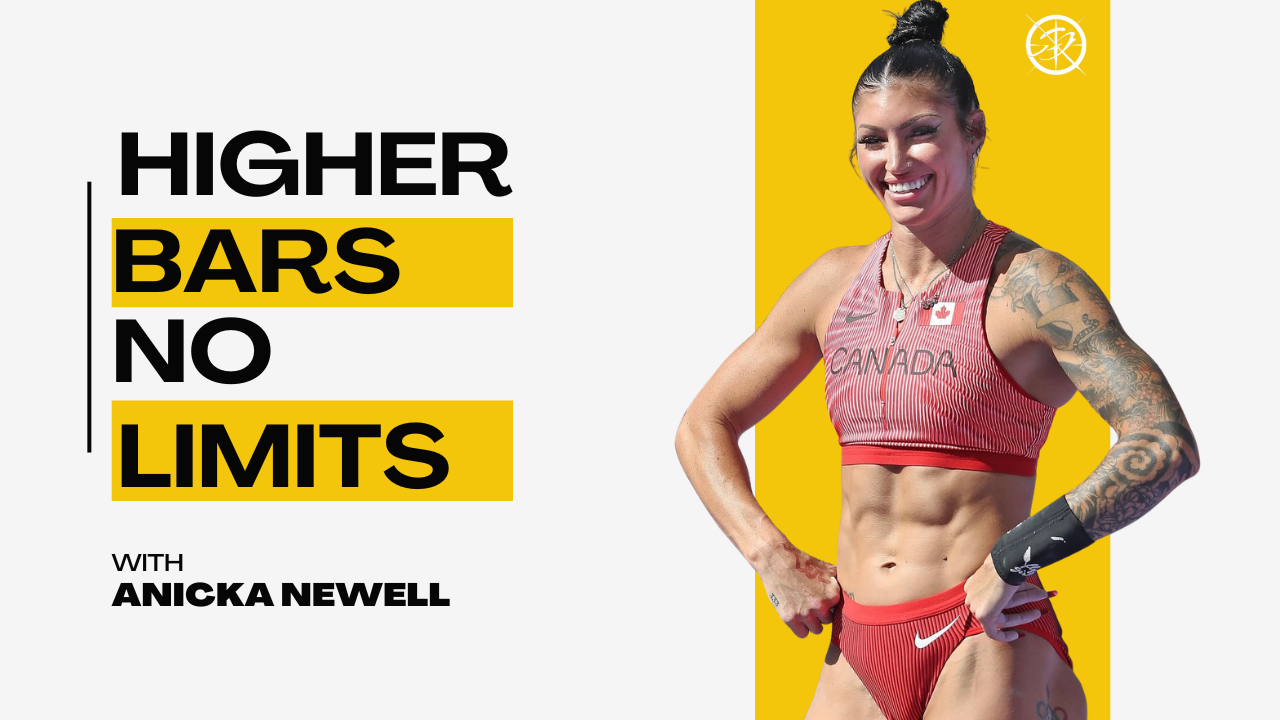
“Average Olympian” to Fly Girl: Inside a World‑Class Pole Vaulter’s Mindset
Three‑time Olympian Anika Newell breaks down what it really means to chase “higher bars” in sport and life, from loving the grind and rehabbing a brutal ankle injury in 15 days to facing federation rejection, modern dating, and life after elite competition.
Why do some athletes keep chasing higher bars long after the world thinks they have peaked? For three‑time Olympic pole vaulter Anika Newell, the answer starts with a love of the grind, an “audience of one” mindset, and an unshakable belief that there is always another level to reach.
In this episode of Corson’s Corner, Anika sits down with host Spencer Coursen to talk about the pain, pressure, and purpose behind a 20‑year commitment to pole vaulting, and what comes next when the runway lights finally go dark.
“There’s Always a Higher Bar”
For Anika, pole vaulting is more than a job, but it’s not her identity. She describes the event as “literally flying,” and what keeps her hooked is the fact that there’s always a higher bar waiting—15 feet becomes 15.1, 15.2, 15.3, and so on, with no real ceiling on what might be possible.
Training days often mean brutal solo workouts on an empty track with nothing but a stopwatch and her own internal standards. She loves pushing her threshold to find out whether she is truly at her limit or just bumping into the comfort‑seeking part of her brain. That willingness to “enjoy the suck” has become her competitive advantage.
Rebuilding Technique After a Decade Pro
Despite being a ten‑year veteran in the sport, Anika essentially tore down and rebuilt her technique with a new coach. She moved from a stiff, muscle‑through‑it “bodybuilder” style to a fluid, dance‑like approach where she and the pole move as one.
Her coach rarely hands out compliments, which Anika prefers; she wants direct feedback, not sugar‑coating. The payoff is obvious: she’s hitting personal records in the weight room and on the track, and she finally feels like she truly understands how to pole vault at a world‑class level.
From “Average Olympian” to Audience of One
In 2024, Athletics Canada dropped Anika from funding and told her they didn’t see any future potential, effectively labeling her an “average Olympian.” That phrase rattled her, especially after three Olympics and multiple World Championship finals—an “average Olympian” is statistically rarer than most people’s dream partner wish lists.
After a long emotional slump and a reset at home with family, she reframed the insult into fuel. She realized she didn’t need a federation to validate her career; she needed to impress herself. In the following indoor season, she ranked top‑10 in the world, proof that her potential was never up for external debate.
Acknowledge, Identify, Decide, Act: Her Resilience Framework
When it comes to stress, fear, and adversity, Anika uses a simple four‑step framework: Acknowledge, Identify, Decide, Act. She first acknowledges the problem and widens her perspective, then identifies the root cause and her options forward. From there, she decides on a path and acts, instead of spiraling in emotion or indecision.
Spencer connects this to the military’s OODA loop (Observe, Orient, Decide, Act), and Anika explains that she built her own version during the mental battles leading up to the Tokyo Olympics, where fear was often her biggest opponent. The system is logical, portable, and works whether she’s dealing with competition anxiety, life stress, or injury.
Turning a 6–8 Week Injury into a 15‑Day Comeback
Five weeks before the conversation, Anika rolled her ankle in a pothole while running strides on a grass field. The result: partially torn ligaments, a sprain, and a bone contusion—a classic “6 to 8 weeks” diagnosis.
Instead of panicking, she went straight into “assessment mode,” breathing, checking swelling and pain levels, and mapping out next steps. She decided on day one she would be back in two weeks. Then she attacked recovery from every angle: twice‑daily brutal PT, daily meditation, grounding walks by the water, breath work, reading mindset literature, consulting a nutritionist, cleaning up inflammatory foods, and leveraging sauna and other tools to push blood flow and healing.
The result: she was running in seven days and back vaulting on day 15, exactly as she had declared. For Anika, it was a powerful demonstration of mind–body connection and what happens when attitude and systems align.
Document, Don’t Perform: Authenticity on Social Media
Unlike many athletes trying to “be influencers,” Anika’s content strategy is simple: she documents her real life instead of creating performances for the algorithm. She films workouts primarily to study technique and then repurposes footage if it might be helpful or interesting to others.
That authenticity cuts both ways. A reel of her squatting with chains in a public gym went viral and drew criticism from people who didn’t understand that this is normal elite training. She shrugs off the hate, noting that people “only hate up,” and that some percentage of detractors is the cost of doing real work in public.
Batteries, Vacuums, and Protecting Her Peace
Anika is fiercely protective of her peace and keeps a small, intentional circle. She resonates with the idea that people are either “batteries” who recharge you or “vacuums” who drain you, and she has no problem cutting off relationships that consistently pull her energy down.
She grew up with steady, resilient parents who modeled calm problem‑solving instead of emotional meltdowns, giving her an early blueprint for distress tolerance. Today, that shows up in how she handles adversity, chooses friends, and manages her mental health during long stretches of isolated training.
Modern Dating, Masculinity, and Wanting to Be in Her Feminine
The conversation turns candid when Spencer asks about dating as a high‑performing woman in today’s world. Anika says bluntly that she has yet to see a man “outman” her—she often finds herself leading conversations, making plans, and driving the connection.
She would much rather relax into her feminine, but that requires a masculine presence she can trust to lead with clarity, consistency, and emotional safety. Dating apps feel more like endless window‑shopping than intentional partnership building, and she is uninterested in playing small‑talk games or pretending not to care. What she wants is simple: a consistent, caring partner whose ambition, values, and capacity to love match her own.
Sacrifice, FOMO, and Life After Elite Sport
Chasing Olympic‑level goals has meant sacrificing almost everything else for eight‑month stretches of each year: birthdays, weddings, girls’ trips, spontaneous dinners, and normal social rhythms. She lives “under a rock” during the season, but insists it has been 1000% worth it to pursue her dreams while she’s young.
Even so, she is honest about the loneliness and FOMO that come with that path and the looming question of retirement. Anika views 2025 as her “full send” season, intending to leave everything on the track and then step back to explore life beyond the runway. She imagines a six‑month pause after the season to see what opportunities and goals emerge, and only then deciding whether to chase a home‑soil Olympics in LA 2028.
Following Bliss: Attitude, Resilience, and Joy as a Compass
Asked what advice she would give someone who wants to emulate her approach to life, Anika narrows it down to three pillars: attitude, resilience, and following bliss. Attitude means owning your reactions instead of throwing tantrums and staying coachable in the face of hard feedback. Resilience means getting back up after each knockdown and finding a new door when the first one stays locked.
Following bliss is her way of choosing paths that genuinely light her up, trusting that joy leads to both purpose and, eventually, profit. For Anika, pole vaulting is what she does, not who she is—but the way she does it reveals a blueprint anyone can use to chase higher bars in their own life.