Are You Being Programmed? Media, AI, and Protecting Your Peace in a Noisy World
Are your media habits quietly programming your mind? In this episode recap, three best friends explore how movies, news, social media, and AI shape your nervous system, identity, and relationships—and what it looks like to drop the masks, protect your peace, and move from surviving to truly living.
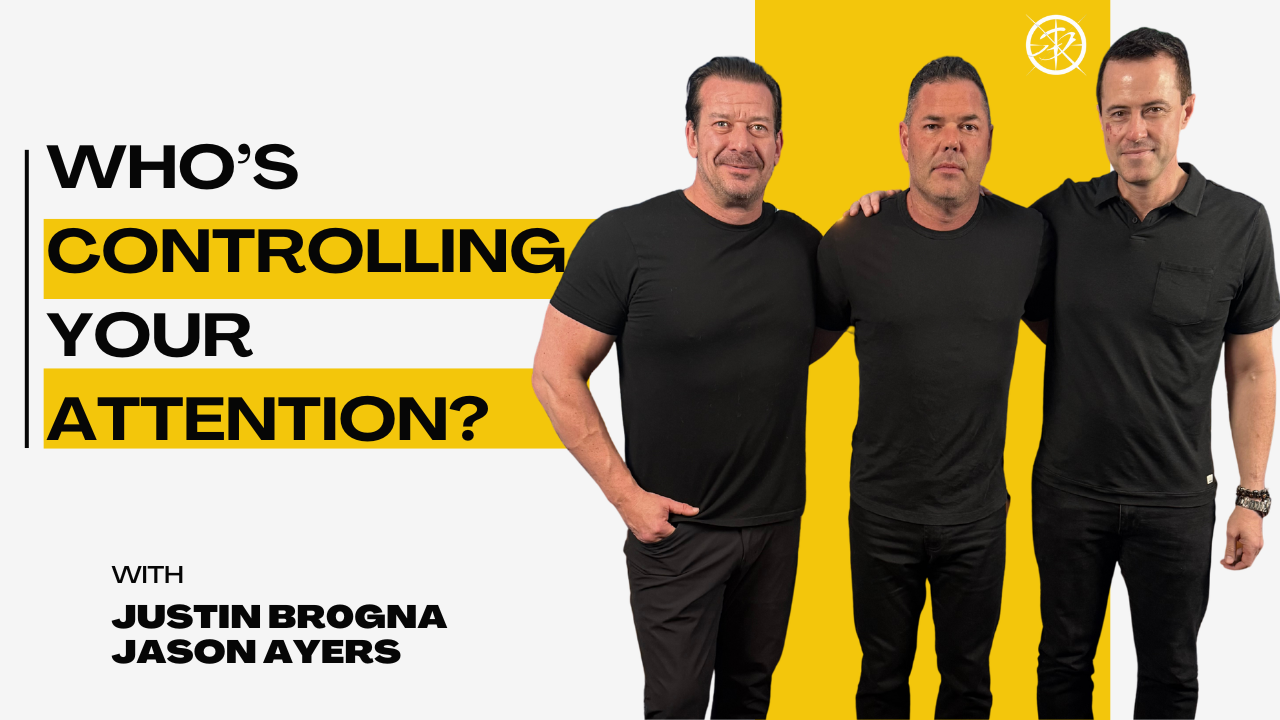
We live in a world that won’t stop talking. Our phones buzz, our feeds scroll endlessly, and even our gym playlists are shaping how we feel, think, and move through the day—usually without us realizing it. In the latest episode of the podcast, three Gen X dads sit down to ask a simple but uncomfortable question: Who’s actually doing the programming here—us, or our media?
How media quietly scripts our identity
For many of us, movies and TV weren’t just entertainment; they were training manuals for who we thought we were supposed to be. From Braveheart and Gladiator double features to Baywatch and comfort sitcoms, screen stories became the lens through which we understood manhood, courage, relationships, and even how we were “supposed” to react to danger.
In this conversation, we explore how “television programming” really did program us—especially as Gen X kids raised on big‑box‑office action and cable reruns. We unpack everything from childhood suicide notes and Faces of Death to the way a single VHS tape or movie night could leave emotional fingerprints that last for decades.
The media diet: what you consume consumes you
Today, the idea of a “media diet” isn’t a metaphor; it’s survival. What we watch, listen to, and scroll doesn’t just inform us—it shapes our nervous system, our sense of safety, and our baseline mood. Hardcore rap at the gym might give you a boost, but it can also slip into a mantra that keeps your system locked in fight‑mode long after you rack the weights.
We talk about using music strategically—different playlists for writing, training, and decompressing—and why some content simply isn’t worth the nervous‑system cost. There’s a big difference between being entertained and being agitated, and that line is easier to cross than most of us realize.
Parenting in the age of TikTok and “infinite scroll”
If you’re raising kids right now, you’re not just managing screen time; you’re managing identity formation in real time. In the episode, we dive into how daughters and sons are navigating Instagram, TikTok, and Snapchat—and how much of that is about connection versus comparison.
We talk about:
Why some kids self‑regulate social media surprisingly well while others get swallowed whole
How to prioritize honest one‑on‑one conversations over rigid “rules” that don’t fit every child
Why many of the people who built these platforms won’t let their own kids use them—and what that tells us
The goal isn’t to create fear; it’s to create awareness—and to give parents a more grounded way to talk about what’s real and what’s engineered.
When language becomes a weapon
The episode also tackles the weaponization of language and how subtle shifts in vocabulary can polarize a society. Whether it’s how we describe protests, immigration, or violence, the words we choose aren’t neutral—they carry emotional weight and political leverage.
We explore:
How redefining “violence” to include words sets the stage for justifying actual physical violence
Why clips of protests and police interactions rarely show the whole story
How media incentives reward outrage, fragmentation, and “us vs. them” narratives
When you zoom out and follow the incentives—who benefits, who profits—it becomes much easier to see why everything feels so inflamed all the time.
News, noise, and how much you really need to know
Traditional news is collapsing, trust in media is plummeting, and at the same time we have more access to information than any generation before us. We talk about the decline of legacy outlets, layoffs at major newspapers, and why many of us feel like we’re drinking from a fire hose of crisis.
The question we wrestle with is not “Should you be informed?” but rather “How much information can you take in before it starts to damage your ability to live well?” Sometimes, the bravest thing you can do is limit your intake and refuse to let every global emergency colonize your nervous system.
AI, robotics, and drinking from the fire hose of change
No modern conversation about media and mental health is complete without talking about AI. From fears of Skynet and killer robots to the quiet reality of synthetic videos that can spark very real human reactions, AI is accelerating faster than our nervous systems can comfortably adapt.
In the episode, we explore:
Why AI isn’t just a tech story—it’s an emotional and existential one
How synthetic media can manipulate perception and behavior at scale
What it means to adapt without surrendering your agency or humanity
The goal isn’t to offer doom or denial, but to find a sane middle path where we use the tools without becoming tools ourselves.
Dropping the masks and protecting your peace
Underneath all the talk about movies, music, protests, news, and AI is a deeper invitation: to drop the masks and stop living as a never‑ending “self‑improvement project.” Sometimes the most radical act is to accept who you are, stop trying to constantly remodel your personality, and actually be present in your own life.
We talk about:
The difference between speaking from a wound versus a scar
How to move from survival mode into authentic living
Why “protect your peace, protect your people, protect your principles” is more than a slogan—it’s a way of navigating a noisy world
It’s about reclaiming your attention, your agency, and your ability to be where your feet are—especially with the people who matter most.
From surviving to thriving in a changing world
The episode closes with a look at personal growth and future aspirations in a world that’s changing faster than any of us can fully process. We explore what it means to become an “elder statesman” in your own life—to move from proving yourself to providing perspective, support, and stability to others.
You don’t need to fix the entire world. You just need to tend to the part of the garden you can touch. That might mean becoming more intentional about your media diet, setting better boundaries around your attention, or finally dropping a persona that no longer fits.
If this resonates, the full episode goes much deeper into these themes—with stories, mistakes, and hard‑won lessons you can actually use. As you read or listen, consider one simple question: What’s one small shift in your media diet that would make your life feel lighter this week?