

Be Rude. Stay Alive.
“Being nice” shouldn’t cost you your safety. This post breaks down why politeness can be dangerous, how to trust your intuition, and how non‑negotiable boundaries become your first line of defense.
Being polite is a courtesy. Protecting yourself is a priority.
From the time many women are little girls, they’re taught to smile, to be agreeable, to avoid “making a scene.” Say yes. Be helpful. Don’t be rude. Even when every internal alarm bell is ringing, that social conditioning can override instinct and create a dangerous hesitation right when fast action is required.
This isn’t about becoming hostile or cold. It’s about recognizing that your safety will never be worth less than someone else’s opinion of your manners.
In this post, I want to share three critical safety lessons: why being nice can become dangerous, how trusting your gut is backed by science—not superstition—and how setting non‑negotiable boundaries becomes your first line of defense.
When Being Nice Becomes Dangerous
Think about these moments:
A stranger asks you to help load something into their car.
Someone you don’t know calls your name in a dark parking lot.
You feel like you’re being followed, but you don’t want to “overreact.”
Your instinct whispers, “Get out of here.”
Your conditioning replies, “Don’t be mean.”
That gap between instinct and action is where danger lives.
People who intend harm are not looking for the strongest target; they’re looking for the easiest one. They look for compliance, not confrontation. If you’ve been trained your whole life to avoid conflict at all costs, you can appear—without even realizing it—like a more promising target.
Giving yourself permission to be “rude” when your safety is at stake is a radical act of self‑protection. You do not owe anyone:
Your time
Your help
Your attention
Your body
Especially not when something feels off.
“Be rude. Stay alive.” is not about being unkind. It’s about recognizing a simple truth: strangers are not entitled to your comfort, but you are entitled to get home safe.
The Science of Trusting Your Gut
Women’s intuition is often treated like a joke or a cliché. It isn’t. It’s neuroscience.
Your brain is constantly scanning your environment, taking in far more information than your conscious mind can process in real time. Microexpressions, subtle tone changes, shifts in body language, environmental anomalies—your nervous system notices these signals before you can put words to them.
That “weird feeling” in your stomach?
The hair standing up on your neck?
The sudden urge to create distance?
That’s your brain alerting you to a pattern that doesn’t match what “safe” usually looks like.
Here’s what makes many women more vulnerable: they’re repeatedly told they’re “too sensitive,” “too dramatic,” or “paranoid” for listening to those signals. Over time, they learn to doubt themselves. They feel pressure to stay, to stay quiet, to stay polite—until it’s too late.
You do not need a court‑approved level of evidence to walk away.
If something feels wrong, treat that feeling as valid data. If you’re wrong and it was nothing, you lost a few minutes of your day. If you’re right, you may have just saved your life. There is no downside to leaving a situation that doesn’t feel safe.
You don’t need permission to trust yourself.
You don’t need proof to leave.
Your discomfort is enough.
Boundaries: Your First Line of Defense
Boundaries are not just “relationship skills.” They are a safety strategy.
A boundary is a clear line that protects your physical, emotional, and relational space. It defines what you will and will not allow. Healthy boundaries:
Keep others from breaking in
Keep you from bleeding out
Predators understand this even if you don’t. They will test your limits long before they ever cross them. A “harmless” touch on the lower back, a crude joke, a persistent push after you say you’re not interested—these are not accidents. They are probes.
If you’re used to minimizing your own needs, you may excuse this behavior, laugh it off, or try not to “make it awkward.” That’s exactly what they’re hoping for.
Your safety depends on having non‑negotiables—lines that are not up for debate:
Physical violence
Emotional abuse
Coercion or forced intimacy
Not today. Not tomorrow. Not ever.
You have the right to say:
“I’m not comfortable with that.”
“I’m not doing that.”
“No.”
And stop there.
“No” is the end of the conversation, not the beginning of a negotiation. Anything you say after “no” is often you giving away your power in an attempt to manage someone else’s reaction.
Practicing Boundaries Before You Need Them
For many people, these statements feel anything but natural. That’s okay. Confidence is not a prerequisite for safety; practice is.
You can normalize these responses by rehearsing them out loud, the same way you’d practice any other skill:
Say “No, I’m not doing that” while looking at yourself in the mirror.
Role‑play scenarios with a trusted friend where you decline, disengage, or walk away.
Rehearse how you’ll exit a situation—what you’ll say, where you’ll go, who you’ll call.
The goal is to make your protective responses automatic, so when stress hits, you’re not searching for words. You already know what to say and do.
Healthy boundaries aren’t selfish. They’re the framework that protects your consent and communicates your self‑respect. Sometimes, to be truly selfless—to show up for the people who rely on you—you must first be willing to be “selfish” with your safety.
You cannot pour from an empty cup. You cannot protect others if you’re not here.
Safety Over Social Approval
At the end of the day, it comes down to this:
Your life matters more than someone else’s comfort.
Your safety matters more than looking “nice.”
Your instincts matter more than social expectations.
Be rude when you need to.
Trust your gut even when you can’t explain it.
Set boundaries that leave no room for negotiation.
Your safety is not negotiable.
If this message resonates with you, share it with someone who needs the reminder that they’re allowed to protect their peace, their body, and their autonomy—without apology.
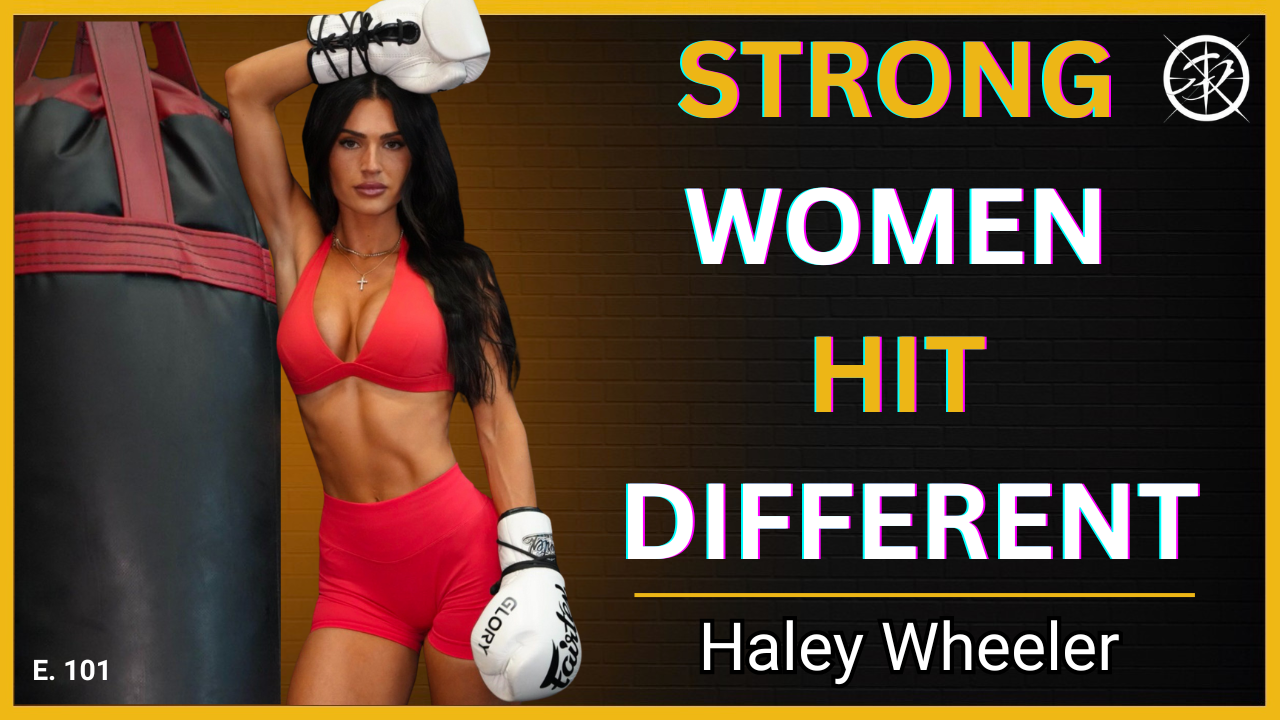
From Rock Bottom to the Ring: How Boxing Helped Haley Beat Depression
Boxing saved her life—then became her business. In this episode, boxing coach and creator Haley Wheeler reveals how she went from a tiny town in Turkey, Texas and severe eating disorders to building confidence, moving to Austin, and launching her Body by Haley programs and app.
When you first meet Haley Wheeler, you see the confident boxing coach with 100K+ followers, packed classes, and a new fitness app on the way. What you don’t see right away is the small‑town girl from Turkey, Texas, who lost her period for three years to anorexia, later gained 60 pounds through binge eating, and used boxing to claw her way out of depression.
In this episode of Coursen’s Corner, Haley shares how she turned a cardio boxing class into therapy, a career pivot, and a platform to empower women far beyond the gym.
Small‑Town Roots and Small Dreams
Haley grew up in tiny Turkey, Texas—so small that her graduating class had only 15 students and everyone played every sport just to field a team. She was the classic small‑town all‑star: basketball, track, cross‑country, cheerleading, dance, and gymnastics, with weekends spent riding horses and four‑wheelers instead of scrolling social media.
Back then, her dreams were just as small as her town; on sixth‑grade career day, she would have said she wanted to be a teacher, mostly because that’s what she saw around her. It wasn’t until she left for college in Lubbock—armed with an ag economics and business scholarship and a love of math—that she realized how limited her worldview had been.
College, though, came with a culture shock: a “huge city” feel, endless restaurants, and a sudden awareness of how she looked compared to everyone else.
Discovering Boxing as Therapy (Not Just Cardio)
Haley first walked into a boxing class in college for a simple reason: she wanted to burn off the freshman 15. A friend dragged her to a cardio kickboxing session, and even though she had no idea what she was doing, the athlete in her kicked in and she instantly felt something click.
Very quickly, she realized boxing was about much more than punches and sweat:
It gave her a place to release emotions she didn’t know how to express verbally as an introvert.
It rebuilt the confidence she’d had as “the athlete” in high school but felt she had lost in a much bigger environment.
It forced her to be fully present—because when you’re boxing, distraction gets you metaphorically (and sometimes literally) punched in the face.
She went from anonymous college student to early‑morning trainer, helping open a boxing club in Lubbock and running 5 a.m. to noon classes before heading to her own college lectures and bartending late into the night. That grind laid the foundation for what would later become her full‑time career.
The Hidden Fight: Eating Disorders and Depression
Behind the scenes, though, Haley was fighting a very different opponent. College brought not only freedom and fast food but also societal pressure and body comparison she had never experienced in her sheltered hometown.
Her journey with disordered eating came in two extreme chapters:
Anorexia:
She began by “cleaning up” her diet and training harder, then slid into extreme restriction fueled by perfectionism and the desire to be as small as possible. Compliments about her shrinking frame only reinforced the behavior, even as she lost her menstrual cycle for three years and watched her hormones and mood crash.Binge eating:
Exhausted by rigidity, she mentally “gave up” and swung to the other extreme, using food as her drug of choice. Binge eating for her meant eating until it physically hurt, chasing a sugar high despite knowing it was harming her, and gaining roughly 60 pounds in just a few months.
During this period, Haley was working from home as a credit analyst, isolated during COVID and stuck in a cycle of overeating, shame, and depression. She describes feeling embarrassed and “silly” for using food to cope, especially as family and friends told her she “looked so good” while she knew internally how sick she really was.
Choosing a New Identity: From “Sick” to “Boxer”
Change didn’t come from a magic pill; it came from a mindset pivot. Haley reached a point where she realized she was letting an eating disorder define her life and rob her of the big future she still secretly wanted.
The turning point came when she felt just confident enough to walk back into a boxing gym. Returning to boxing:
Reconnected her with an identity that wasn’t centered on weight, but on strength and capability.
Helped her shed weight in a sustainable way while rebuilding mental resilience.
Reinforced the idea that if she could see herself as “a boxer,” then her daily micro‑decisions—food, movement, rest—needed to match that identity.
She combined that with journaling, honest self‑audits of her habits, and embracing balance—what she calls an 80/20 mindset instead of all‑or‑nothing thinking. Instead of obsessing over a “perfect” day, she began judging herself over a week, allowing space for pizza and real life without spiraling.
Leaving Safety Behind: Career Pivots and Moving to Austin
Professionally, Haley bounced from credit analyst to real estate in Lubbock, underwriting and selling properties during the COVID boom. But she was also in an unhealthy relationship that left her isolated and disconnected from who she was.
When she finally left that relationship, she started rebuilding her life—making new friends, working real estate on her own, and admitting to herself that she wanted more than West Texas could offer. Lubbock, once overwhelming, now felt small.
A visit to Austin to see her best friend changed everything. Introduced to a built‑in community and energized by the city’s culture, she realized Austin could be the place where she finally aligned her life with her passions: boxing, women’s empowerment, and creative work in health and wellness.
She moved to Austin in May, initially planning to keep real estate as her primary career while “having fun” and getting her feet under her. By fall, though, she felt the pull to get serious about what she truly wanted—and that meant going all‑in on fitness and content.
Going All In: Content, Community, and a 10X Social Media Jump
When Haley decided to treat social media as a business instead of a casual diary, everything accelerated. She had around 10,000 followers when she arrived in Austin; within about six months, that number had jumped to roughly 100,000.
Her growth wasn’t an accident; it came from intentional strategy:
She clarified her brand pillars: boxing, women’s empowerment, confidence, discipline, and a distinctly feminine aesthetic.
She hired a professional videographer, batch‑shot high‑quality content, and personally edited her videos to maintain a consistent visual style.
She used tools like ChatGPT to build content calendars, develop themes, and stay consistent with posting.
At the same time, her in‑person presence grew. Collective in Austin saw her hit the bag, learned her story, and brought her in to coach “Knockout Glutes,” a class that blends lower‑body strength training with boxing fundamentals and core work.
The result: women who might never step into a traditional fight gym suddenly had a safe, inviting on‑ramp to boxing—often starting with zero experience, painted nails, and a little bit of nerves. They left sweaty, smiling, and surprisingly proud of how hard they could actually hit.
Empowering Women Through Knockout Glutes and Online Programs
Haley’s approach to boxing is deliberately welcoming and technically sound. She starts beginners with foundational punches (the one‑two‑three), basic stance, and safe mechanics, then layers in rotation, footwork, and defense so they use their full body instead of just their shoulders.
Her philosophy: boxing should give you “real confidence, not fake confidence”—the kind that comes from feeling capable, not just looking fit.
To reach women beyond Austin, she has launched online training programs:
Knockout Glutes (4‑week program):
A lower‑body strength, boxing, and core plan available in both at‑home and gym versions, designed so you can do the boxing segments with nothing more than light dumbbells.Bikini Body Blueprint (6‑week challenge):
A time‑bound program that provides structured workouts and group accountability for women wanting to lean out and tighten up in a healthy, balanced way.
These standalone programs are serving as the foundation and “bridge” to something bigger: her own training app.
The Body by Haley App: Scaling Her Mission
Haley’s next major step is the Body by Haley app, a subscription‑based platform designed to bring her method to women everywhere. Inside the app, users will be able to:
Input their goals—whether that’s fat loss, muscle gain, or performance—and receive workouts built from movements Haley actually does herself.
Follow nutrition plans tailored to different dietary preferences, from standard to vegan.
Track calories and macros, including via AI‑powered photo logging of meals, similar to advanced food‑tracking apps.
Join challenges with community chat, or upgrade to higher‑touch tiers that offer more direct one‑on‑one support.
She’s realistic that building an app takes longer and costs more than you think, but the vision is clear: to create a scalable ecosystem where boxing, strength training, mindset, and community all live in one place.
Staying Grounded: Faith, Journaling, and Boundaries
For all the momentum in her professional life, Haley is intentional about how she refills her own cup. She leans on:
Boxing as her primary therapy and emotional release—even as she works to carve out time to train herself, not just her clients.
Long walks outside with her dog, Zara, to reset when decision fatigue and stress pile up.
Morning routines that include reading her Bible and journaling to process emotions, clarify goals, and keep her identity rooted in something deeper than followers or revenue.
She even uses AI as a reflection tool—feeding her journaling themes into ChatGPT to get prompts, affirmations, and reminders tailored to what she’s currently working through.
Most importantly, she protects authenticity as a non‑negotiable. Raised by a father who stressed humility, “no‑quit” energy, and staying grounded, she refuses to become one of those people who projects empowerment online while living out of alignment offline. The version of Haley you see on Instagram is the same one you’ll meet in class.
What She Wants Other Women to Know
Looking back, Haley says the advice she’d give her 18‑year‑old self is simple: stop people‑pleasing and apologizing, and be unapologetically yourself. Your life is too short to live small because someone else expects you to.
Her story is proof that:
You can grow up with “small dreams” and still build a big life once you’re exposed to new possibilities.
You can survive extreme mental health struggles and disordered eating—and rebuild a healthy, powerful relationship with your body and food.
You can pivot careers, move cities, and start over, even when it means leaving something safe to chase something uncertain but aligned.
For Haley, beating depression with boxing gloves wasn’t just about throwing punches; it was about choosing a new identity, stepping outside her comfort zone, and deciding she deserved more than survival.
And now, through her classes, programs, and upcoming app, she’s helping thousands of women do the same.
Why Suppressing Emotions Is Slowly Destroying You
Many men are taught to suppress emotions in the name of strength—but that belief comes at a cost. This episode explores how emotional repression leads to disconnection, burnout, and crisis—and why true strength comes from feeling, healing, and growing.
The Lie We’re Told About Masculinity
From a young age, many of us are taught that being a man means being emotionally unshakable. Crying is कमजोरी. Vulnerability is unacceptable. Strength is silence.
For some, that message is explicit—like being told not to cry unless something catastrophic happens. For others, it’s modeled indirectly through family dynamics, culture, and media. Think about the heroes we grew up watching: stoic, isolated, carrying pain without ever expressing it.
But here’s the problem—no one teaches what to do with emotions. Only that you shouldn’t have them.
How Emotional Suppression Gets Reinforced
When emotional maturity isn’t modeled at home, we look elsewhere. Movies, military culture, and societal expectations often reinforce the same message: suppress, endure, and move on.
Grief becomes something you choke back. Trauma becomes a badge of honor. Even PTSD can be framed as proof you “did your job right.”
Over time, this conditioning builds a version of you that feels strong on the outside—but disconnected on the inside.
The Cost of Becoming a “Shell”
Suppressing emotions doesn’t eliminate them. It buries them.
What starts as protection can slowly turn into disconnection. The creative, compassionate, fully-expressed version of yourself gets replaced by a “warrior” identity designed to survive—but not to feel.
Eventually, that emotional backlog doesn’t just disappear. It accumulates.
And when it finally surfaces, it doesn’t come out gently.
The Breaking Point That Changes Everything
For many men, the turning point comes during a crisis—burnout, breakdown, or even suicidal thoughts.
It’s in those moments that the truth becomes unavoidable: emotions aren’t the enemy. Ignoring them is.
Therapy, reflection, and real-life experiences begin to reveal something unexpected—feeling your emotions doesn’t destroy you. It actually helps you heal.
Why Emotions Only Last (If You Let Them)
One of the biggest misconceptions about emotions is that if you allow them, they’ll consume you forever.
In reality, most emotional waves are brief—more like a 90-second song than a permanent state.
But when you interrupt or suppress them, you reset the process. The emotion never completes its cycle. It keeps coming back, demanding to be felt.
Think of it like stopping a song halfway through—every time you restart it, it begins from the beginning.
Let it play once, and it’s done.
Small Feelings vs. Big Crises
When you ignore small emotional signals, they don’t disappear—they grow.
What could have been processed in a moment becomes something you’re forced to confront later, often in a much bigger and more overwhelming way.
Handling emotions in real time is like routine maintenance. Ignore it long enough, and you’re dealing with a full system failure.
Redefining Strength
There’s a difference between appearing strong and actually having strength.
Stoicism—enduring without expression—can look like strength. But real strength is something deeper:
The willingness to face what hurt you
The ability to feel without shutting down
The capacity to heal and come back stronger
Strength isn’t about avoiding damage. It’s about what you do after you’ve been hurt.
A New Definition of Masculinity
Masculinity isn’t the absence of emotion—it’s the mastery of it.
It’s the ability to feel, process, and release without losing yourself. It’s knowing that vulnerability isn’t weakness—it’s a path to clarity, connection, and growth.
And sometimes, it’s as simple as allowing yourself to feel something in the moment—whether that’s grief, memory, or even a reaction to a scene in a movie.
Because when you give yourself permission to feel now, you prevent the explosion later.